
Common Mistakes First-Time Jewelry Buyers Make and How Professionals Avoid Them
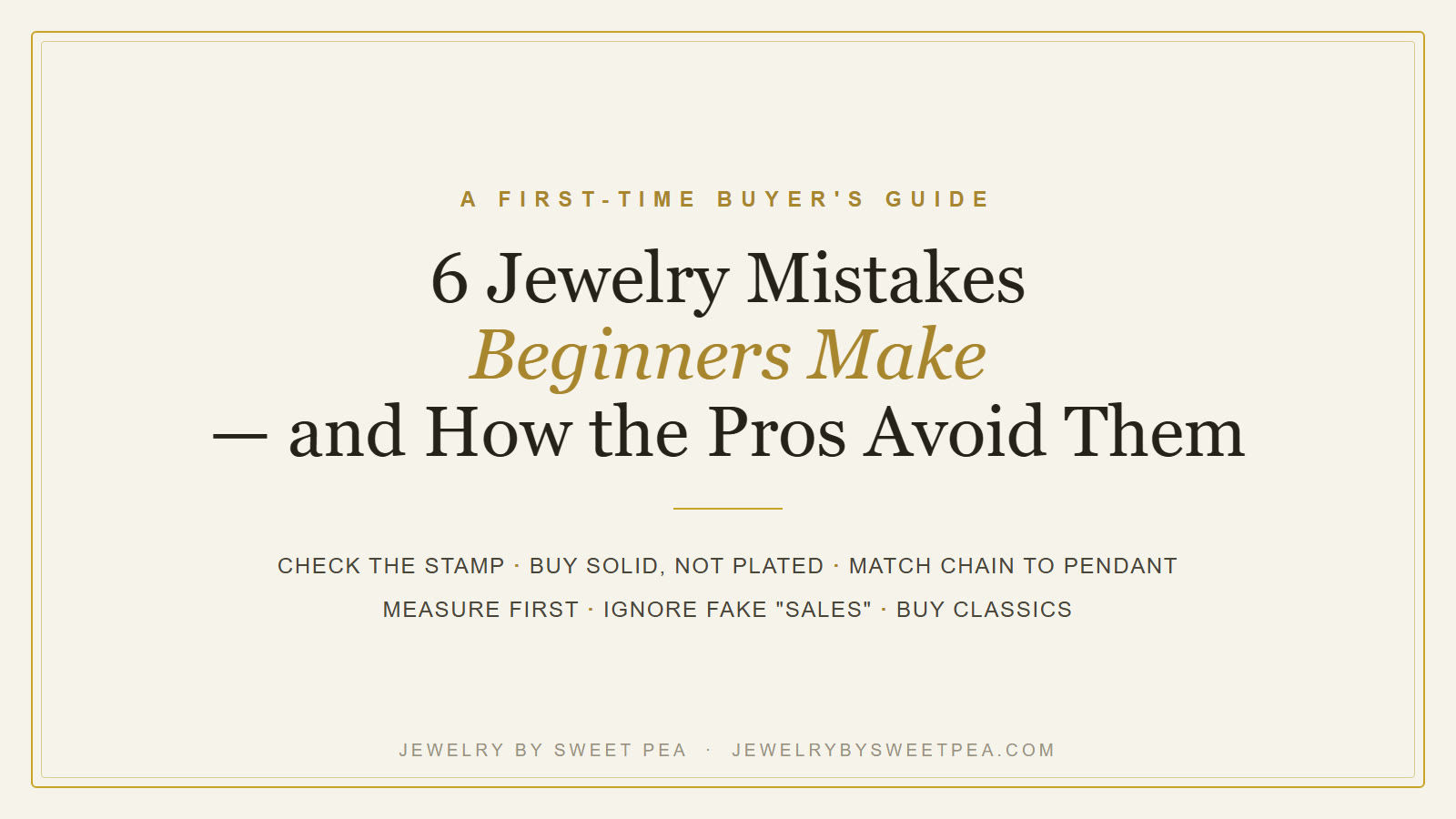
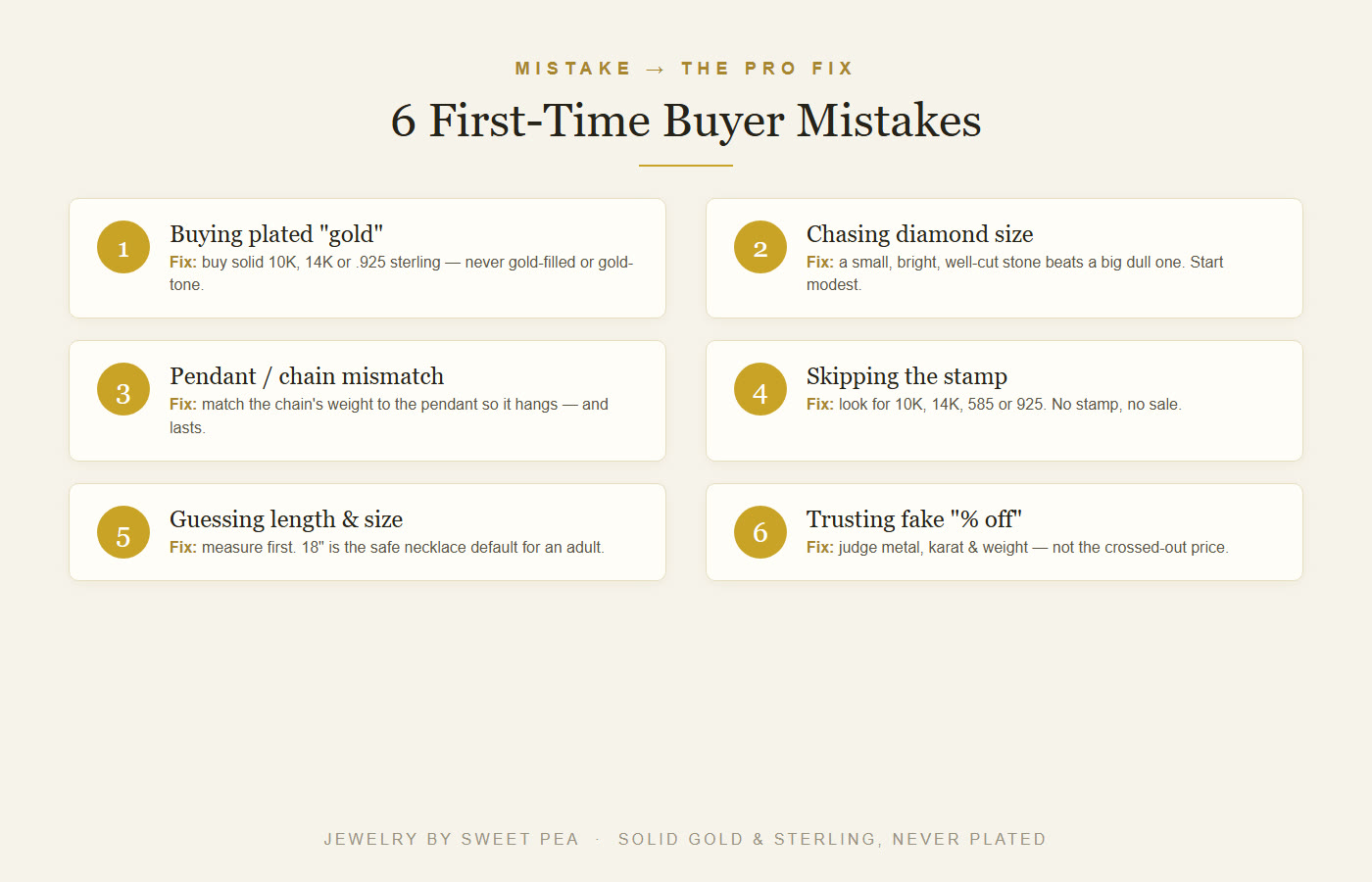
The short answer: the big first-time mistakes are buying gold-plated pieces thinking they're solid gold, chasing diamond size over quality, mismatching a pendant and chain, skipping the metal stamp, guessing at length or size, and being fooled by inflated "% off" sales. Pros avoid all six by reading the karat stamp, buying real metal once, and judging value by what a piece is actually made of.
Buying your first real piece of jewelry should be exciting, not stressful. But the jewelry world is full of small traps that cost beginners money — coatings that wear off, "sales" that aren't, sizes that arrive wrong. After years of helping first-time buyers, we've seen the same handful of mistakes again and again. Here they are, with the simple professional habit that prevents each one.
Mistake 1: Buying "gold" that's really gold-plated
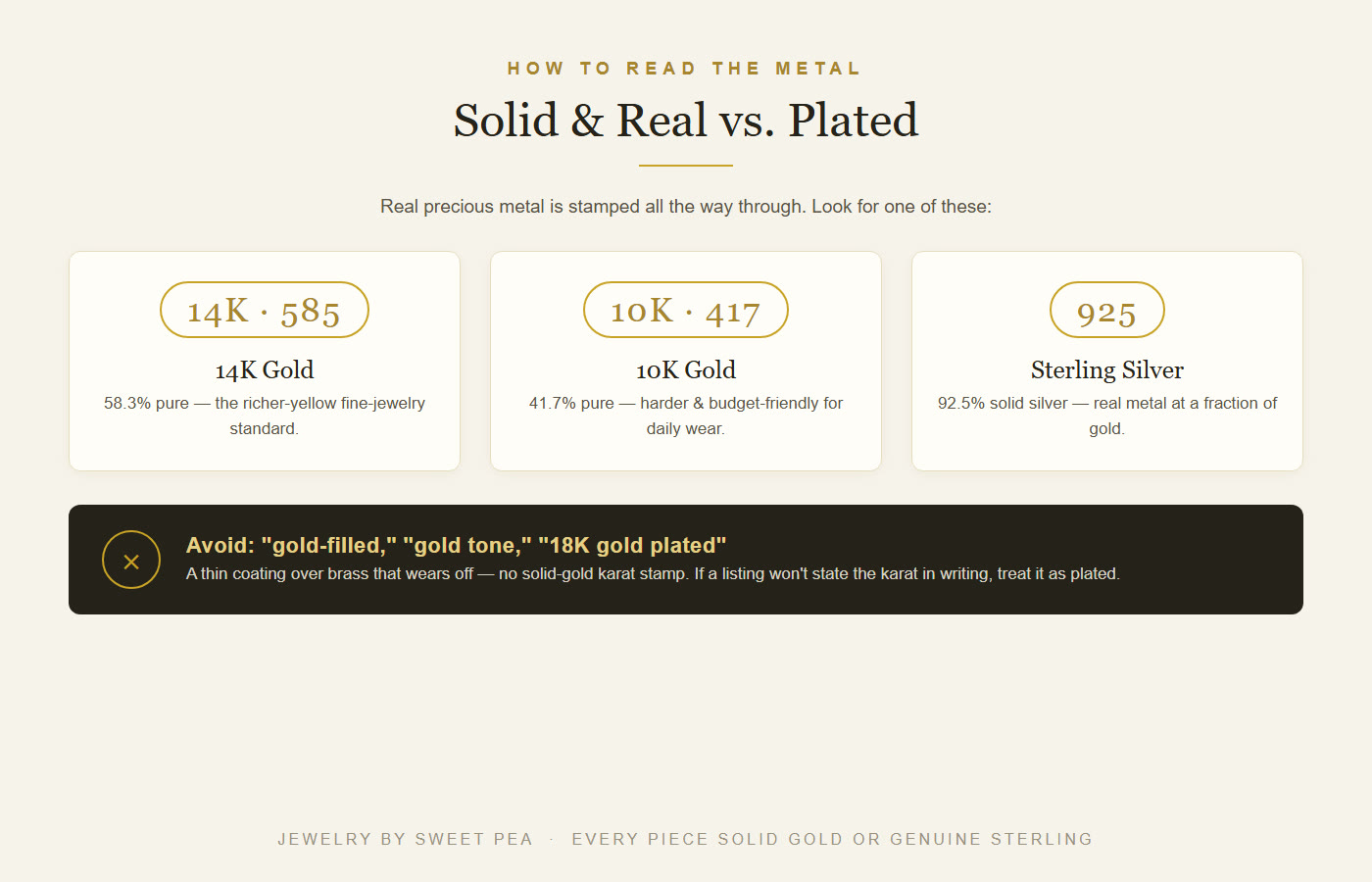
This is the most expensive beginner mistake, and it usually isn't even obvious. A piece described as "gold," "gold tone," "gold-filled," or "18K gold plated" is base metal — usually brass — with a microscopically thin gold coating that wears off in months, leaving a green-ish or grey base behind. It looks identical to solid gold in a photo and costs a fraction, which is exactly why it sells.
How pros avoid it: they only buy solid gold or genuine sterling, and they read the listing for the karat word — 10K, 14K, or .925 sterling. "Solid" means the piece is the same metal all the way through. A real everyday chain like our 10K Yellow Gold 3mm Rope Chain (about $324) costs more up front than a plated look-alike, but it never wears down to brass — so over a decade it's the cheaper choice. Every piece we sell is stamped, solid gold or genuine sterling; we don't carry plated "looks-like" jewelry.
Mistake 2: Chasing diamond size instead of quality
Beginners often fixate on carat weight — bigger must be better. In reality, a large, cloudy, poorly cut stone looks worse than a small, bright, well-cut one, and the price climbs steeply with size. The professional instinct is the opposite: buy a smaller, livelier diamond in solid gold rather than a big dull one.
How pros avoid it: they start modest and let cut do the work. A quarter-carat or smaller pair of studs in a simple four-prong setting — like our 10K White Gold .20Ct. Diamond Stud Earrings (about $353) — is a genuine buy-it-for-life piece you can always size up later. If you want to understand how diamonds and gold are actually graded, the Gemological Institute of America keeps a clear, ad-free gold and jewelry education page.
Mistake 3: Mismatching the pendant and the chain
A surprising number of first necklaces fail because the chain and pendant don't suit each other. A heavy pendant on a hair-thin chain looks unbalanced and stresses the links until they snap; a chunky chain swallows a small, delicate charm. Buyers often grab whichever chain is cheapest without thinking about the pairing.
How pros avoid it: they match the chain's weight to the pendant. For a small-to-medium pendant such as our 10K Yellow Gold Cross Pendant (about $112), a 1mm–1.5mm cable or rope chain is plenty; save the thick rope for a substantial pendant or solo wear. When in doubt, ask — or browse a coordinated pair in our Pendants & Charms and Necklaces collections.
Mistake 4: Never checking the metal stamp
Real precious-metal jewelry is stamped with a tiny "hallmark" — 10K, 14K, 585 (which means 14K), 925 (sterling), or PLAT. First-time buyers rarely look for it, and a missing stamp is the single clearest warning sign that a piece isn't what it claims to be.
How pros avoid it: they check for the stamp before they buy and after the piece arrives. U.S. sellers are bound by the FTC Jewelry Guides (16 CFR Part 23), which govern exactly how gold and silver content may be described — a listing that won't state the karat plainly is telling you something. A reputable seller states the metal in writing and stamps the piece; if neither is true, walk away.
Mistake 5: Guessing at chain length and ring size
Jewelry arrives in fixed sizes, and guessing is how beginners end up with a choker that should have been a collarbone necklace, or a ring that won't pass a knuckle. Returns on sized items are a hassle, and engraved or special-order pieces often can't be returned at all.
How pros avoid it: they measure first. For necklaces, 18 inches is the safe default for an adult — it sits right at the collarbone and suits almost every neckline; 16 inches sits higher like a choker, 20–24 inches drops onto the chest for layering. For rings, measure an existing ring that fits the correct finger against a printable size chart, and remember that wider bands fit more snugly. When you're unsure, ask us before ordering — it takes a minute and saves a return.
Mistake 6: Falling for the fake "% off" sale
"$899, marked down from $2,400!" is the oldest trick in jewelry retail. Many chain stores set an inflated "original" price so the discount looks dramatic, when the sale price is simply the real price. First-time buyers anchor to the crossed-out number and feel like they scored a deal.
How pros avoid it: they ignore the discount theater and judge the piece on what it's made of — metal, karat, gram weight, and stone quality. A solid 10K gold piece has real intrinsic value tied to the gold market regardless of any "sale" sticker. Price two comparable solid-gold pieces by their actual specs, not by whose "original price" is bigger.
Bonus mistake: Assuming real metal is out of your budget
Plenty of beginners settle for plated fashion jewelry because they assume genuine gold or silver is out of reach. It often isn't. Sterling silver (.925) is solid precious metal at a fraction of gold's price — a genuine sterling piece like our Sterling Silver Diamond-Cut Cross Pendant (about $53) or a Sterling Silver Slip-On Bangle (about $55) costs less than many plated brands while being real metal you can keep for life. And classic solid-gold pieces aren't always pricey either: simple 10K Yellow Gold Small Hoop Earrings (about $169) are a buy-once, wear-forever staple that never goes out of style — the opposite of a trend purchase you'll regret.
A simple first-time buyer's checklist
- Read the metal word. 10K, 14K, or .925 sterling — in writing. No karat stated, no sale.
- Buy solid, not plated. Real metal once beats replacing plated pieces every year.
- Match chain to pendant. Delicate charm → fine chain; substantial pendant → heavier chain.
- Measure before you buy. 18 inches is the safe necklace default; size rings against a chart.
- Judge value by specs, not by the discount. Metal, karat, gram weight, stone — that's the real price.
- Buy classics first. Studs, hoops, a fine chain, a simple pendant outlast every trend.
Frequently asked questions
How can I tell if jewelry is real gold or just gold-plated?
Look for a stamp — real gold is marked 10K, 14K, 18K, or with the European number (585 = 14K, 750 = 18K). Plated pieces are usually described as "gold-filled," "gold tone," or "18K gold plated," and have no solid-gold karat stamp. If a listing won't state a karat in writing, treat it as plated. A reputable seller always states the metal plainly.
Is sterling silver real, and is it worth buying?
Yes — sterling silver is 92.5% pure solid silver (the ".925" stamp), a genuine precious metal, not a coating. It costs far less than gold, which makes it the smartest way to own real jewelry on a budget. It's often rhodium-plated for extra shine and tarnish resistance, but the base is solid silver all the way through, so it lasts for years.
What necklace length should a first-time buyer choose?
For an adult, 18 inches is the safest default — it sits right at the collarbone and works with nearly every neckline and pendant. Choose 16 inches for a higher, choker-like fit, or 20 to 24 inches to wear a pendant lower on the chest or to layer. When unsure, 18 inches is rarely wrong.
Why is the same-looking ring so much cheaper somewhere else?
Usually because it's a different metal or stone quality than it appears. A cheaper "gold" ring is often plated base metal, and a cheaper "diamond" may be a lower clarity, heavily included, or lab-simulant stone. Compare the actual specs — karat, gram weight, and stone grade — not just the photo or the headline price.
What should my very first fine-jewelry purchase be?
A versatile classic you'll wear constantly: a pair of gold hoops or diamond studs, a fine solid-gold chain, or a simple pendant. These go with everything, never look dated, and hold their value far better than trend pieces. Buy solid metal once, start small, and add over time.
Jewelry by Sweet Pea is a family-run fine jewelry store. Every piece is solid 10K or 14K gold or genuine sterling silver — never plated — sourced from U.S. wholesalers and shipped from the USA. Browse our Necklaces, Earrings, and Pendants & Charms collections, or ask us anything before you buy.