
Experts Explain How to Read a Gold Karat Stamp and Spot Fake Markings
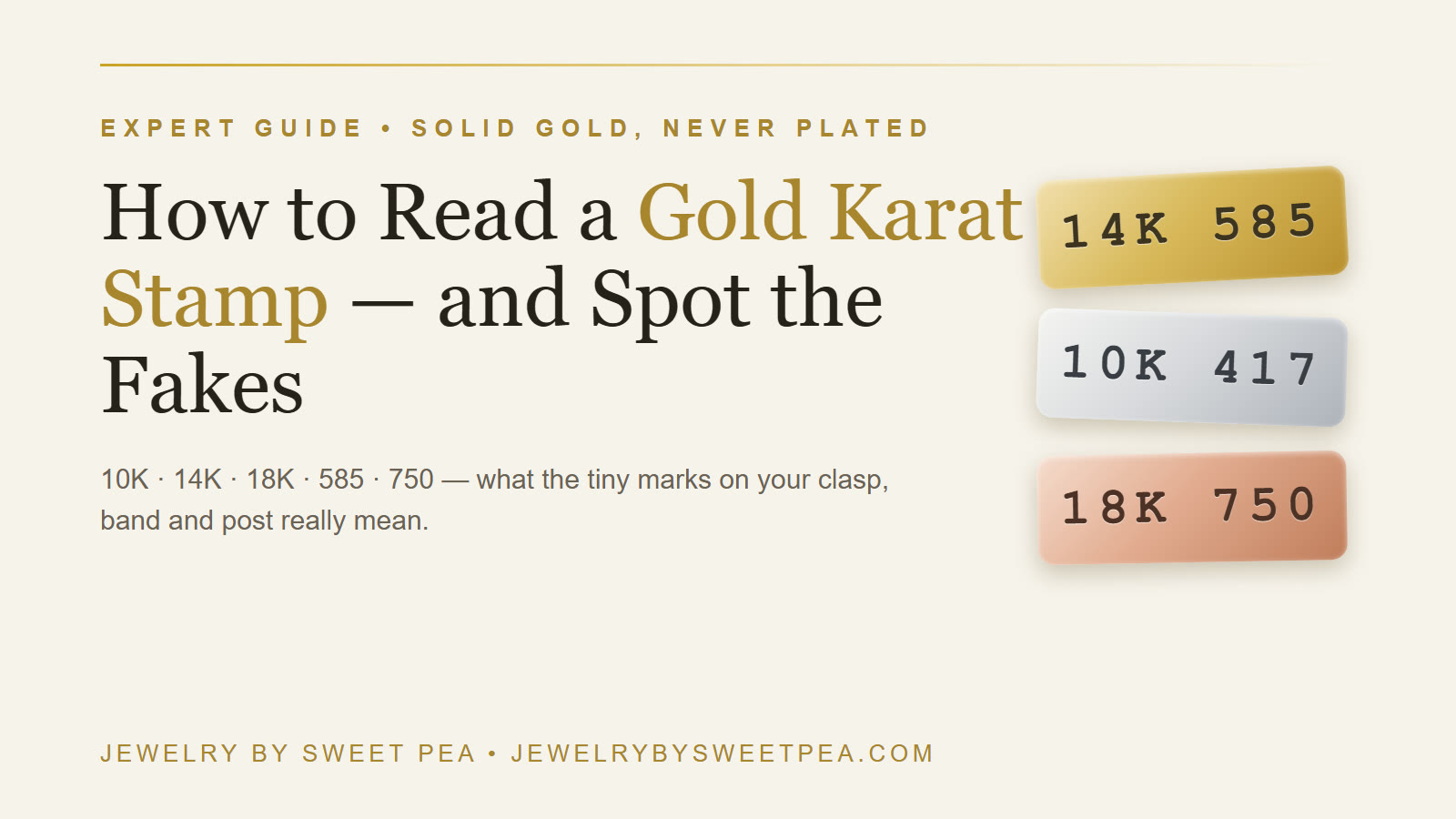
The short answer: a karat stamp tells you how much of the metal is actually gold — 10K is 41.7% gold, 14K is 58.3%, 18K is 75%, and the European numbers 417, 585 and 750 mean exactly the same thing. Find the stamp on the clasp tag of a chain, inside a ring band, or on an earring post. The giveaway marks on look-alike pieces are the letters after the karat: GP, GEP, HGE and RGP all mean a thin gold coating over base metal, and 1/20 14K GF means gold-filled — not solid gold.
We're a family jewelry store, and "is this real gold?" is the question we hear most. The good news: gold is one of the few things you buy where the answer is stamped right on the product — once you know how to read it. Here's how the stamps work, where to look, and the tricks experts use to spot a fake in seconds.
What do the numbers on a gold stamp actually mean?
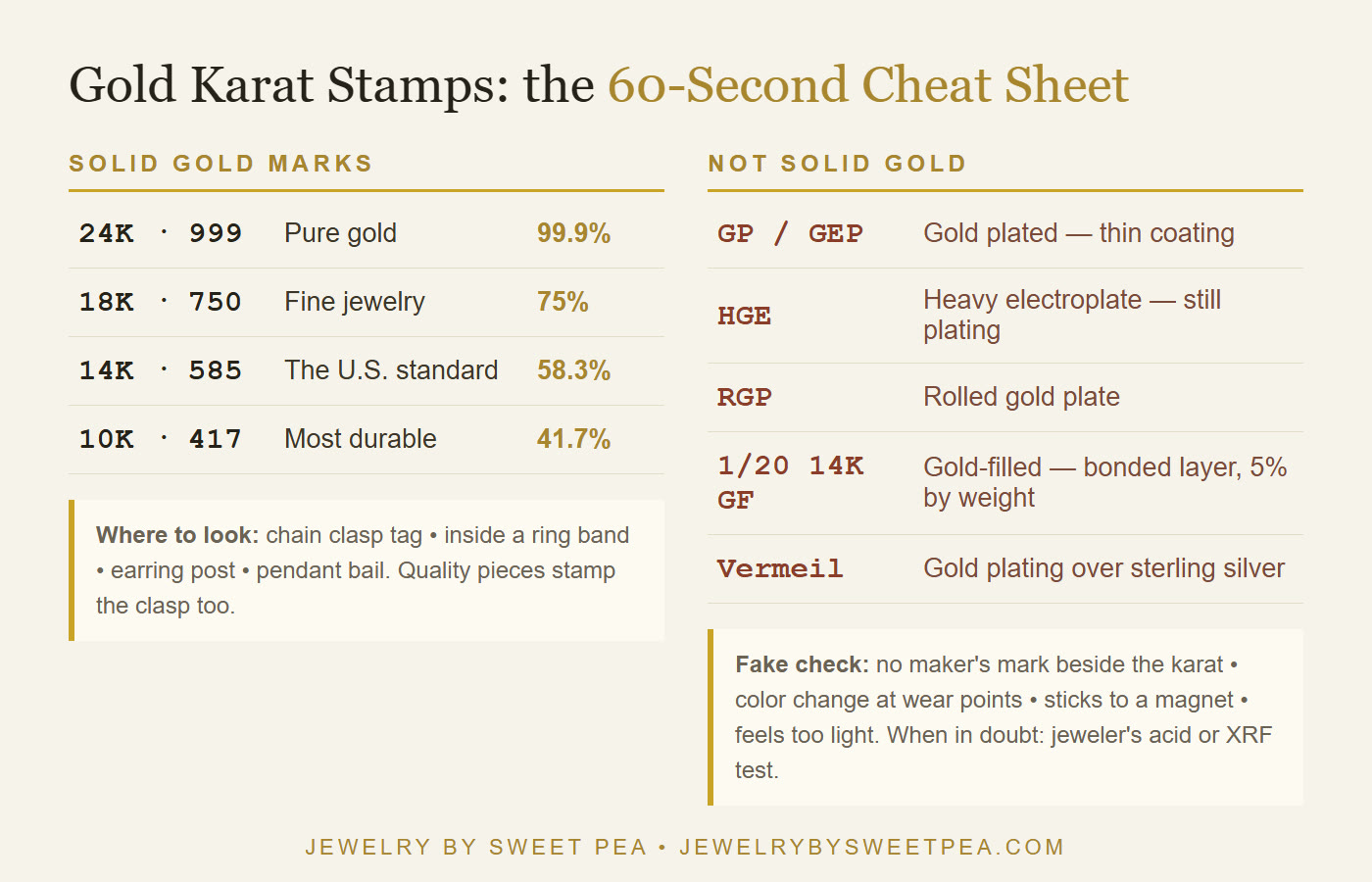
Pure gold is 24 karat. Because pure gold is too soft for everyday jewelry, it's alloyed with other metals for strength, and the karat number tells you the proportion of gold in the mix. Some countries stamp the same information as a three-digit "fineness" number — parts of gold per thousand. Both stamps are equally legitimate:
- 24K / 999 — pure gold. Beautiful, soft, rarely used for Western everyday jewelry.
- 18K / 750 — 75% gold. Rich color, common in high-end and European pieces.
- 14K / 585 (sometimes 583) — 58.3% gold. The American sweet spot of color, durability and price.
- 10K / 417 — 41.7% gold. The most durable karat gold, and the legal minimum to be sold as "gold" in the United States.
White gold and rose gold carry the same stamps — a 14K white gold hoop and a 14K rose gold hoop each contain exactly as much gold as a 14K yellow piece. The color comes from the alloy metals (nickel or palladium for white, copper for rose), not from less gold.
Where do you find the stamp?
Makers put the stamp where it won't spoil the look of the piece, so it takes a second to find:
- Necklaces and bracelets: on the little flat tag next to the clasp, or on the clasp itself.
- Rings: inside the band.
- Hoop earrings: on the post, or inside the hoop near the hinge.
- Pendants: on the bail (the loop the chain runs through) or the back.
The stamps are tiny — a 10x jeweler's loupe or your phone camera zoomed all the way in makes them easy to read. One expert habit worth copying: on a chain, check that both the chain tag and the clasp are stamped. A solid-gold chain deserves a solid-gold clasp, and on quality pieces both are marked.
Which letters mean it's NOT solid gold?
This is where most confusion — and most "gold" bargains that aren't — live. The karat number can be perfectly honest while the letters after it quietly change the meaning:
- GP or GEP (gold plated / gold electroplate) — a microscopically thin gold layer over base metal. "18K GP" contains a fraction of a percent of gold.
- HGE (heavy gold electroplate) — thicker plating, still plating. It wears through with use.
- RGP (rolled gold plate) — a thin bonded gold layer, mostly seen on vintage watches.
- GF (gold-filled), stamped like 1/20 14K GF — a bonded gold layer that must be at least 1/20th of the item's weight. Far more durable than plating and an honest budget material, but not solid gold and priced accordingly.
- Vermeil — gold plating over sterling silver. Real silver underneath, still a coating on top.
None of these marks are scams when they're disclosed — U.S. law spells out exactly how each may be described in the FTC Jewelry Guides (16 CFR Part 23). The scam is when a listing shouts "18K gold" and the stamp quietly reads "18K GP." Our own policy is simpler: everything we sell is solid karat gold or sterling silver, never plated, so the stamp and the listing always say the same thing.
How do experts spot a faked stamp?
A counterfeit stamp is possible — a fraudster can strike "14K" into brass as easily as a mint can strike it into gold. Here's the quick screen jewelers actually use:
- Look for the trademark next to the karat mark. Under the FTC's gold-marking rules, a U.S. quality stamp is supposed to be accompanied by the maker's registered trademark. A lone "14K" with no maker's mark on a new piece is a yellow flag.
- Check the wear points. On plated fakes, the high spots — ring edges, clasp corners, chain links that rub — show a different color metal peeking through. Solid gold is the same color all the way through, scratches and all.
- The magnet test screens out the worst fakes. Gold is not magnetic. If a strong magnet grabs the piece, it's not solid gold. (The reverse isn't proof — brass and copper aren't magnetic either — so treat this as a quick "no," never a "yes.")
- Weight tells on hollow fakes. Gold is dense — nearly twice the density of brass. A "gold" chain that feels like a feather is answering your question.
- When money is on the line, test, don't guess. Any bench jeweler can acid-test or XRF-scan a piece in minutes for a few dollars. That's the definitive answer — a stamp is a claim, a test is a fact.
Does no stamp mean fake?
Not automatically. Very old pieces (U.S. stamping conventions only became law in the early 1900s), handmade jewelry, and pieces that were resized or repaired — where the stamped section was cut away — can be genuine karat gold with no visible mark. The reverse is the rule to remember: a stamp doesn't make it gold, and a missing stamp doesn't make it fake. An unstamped piece is simply an untested piece; let a jeweler's acid or XRF test settle it before you buy or sell.
What a real stamp looks like at every budget
The best way to get comfortable reading stamps is to own a piece you know is right. Every one of these is solid karat gold from our own shelves, stamped exactly the way this article describes:
- Under $110: the 14K White Gold Small Endless Hoop Earrings (about $48) put a 14K stamp on your desk for the price of dinner — and prove white gold carries the same mark as yellow. The 10K Yellow Gold .5mm Box Chain (about $102) shows the classic 10K tag-at-the-clasp arrangement.
- $110–$200: the 14K Yellow Gold 2x15mm Tube Hoop Earrings (about $134) hide their stamp on the post, and the 14K Rose Gold Diamond-Cut Hoop Earrings (about $166) are the rose-gold proof that color doesn't change the karat. The 14K Yellow Gold Magnetic Clasp Converter (about $90) is the "check the clasp" lesson made useful — a stamped, solid 14K clasp that makes any necklace easy to put on.
- $200+: the 10K Yellow Gold 2mm Diamond-Cut Rope Chain (about $208) is a substantial everyday chain where you can find the stamp on the tag and the lobster clasp — the two-stamp habit this article teaches.
Frequently asked questions
What does 585 mean on gold jewelry?
585 is the European fineness mark for 14 karat gold — 585 parts gold per thousand, or 58.5% gold. A piece stamped 585 and a piece stamped 14K contain the same amount of gold. You'll occasionally see 583 on older pieces; it's the same 14K standard calculated slightly differently.
Is 10K gold real gold?
Yes. 10K is 41.7% gold alloyed for maximum durability, and it's the legal minimum karat that may be sold as "gold" in the United States. It's the most scratch-resistant karat gold you can buy, which is exactly why it's popular for chains and everyday pieces.
What does 1/20 14K GF mean?
Gold-filled: a layer of 14K gold mechanically bonded to a base metal core, with the gold layer making up at least 1/20th (5%) of the piece's weight. It's far more durable than plating and honestly marked — but it is not solid gold, and it should cost a fraction of a solid 14K piece.
Is unstamped gold always fake?
No. Antique, handmade and repaired pieces can be genuine gold without a visible stamp. But an unstamped piece is unverified — have a jeweler acid-test or XRF-test it before paying a solid-gold price.
Can a karat stamp be faked?
Yes — a stamp is a claim, not proof. The quick screens are the missing maker's trademark beside the karat mark, a different color showing at wear points, magnetic attraction, and suspiciously light weight. A bench jeweler's acid or XRF test settles it definitively in minutes.
Shop with the stamp in plain sight: every chain, hoop and clasp in our necklaces, earrings and bracelets collections is solid karat gold or sterling silver — never plated — with free shipping and a free gift box on every order.