
How Do You Buy Fine Jewelry Online Safely Without Seeing the Piece in Person First
The short answer: Buy from a seller who states exactly what the piece is made of, lists its size and metal weight, shows clear photos, and offers a written return policy you can actually use. Pay with a credit card on a secure checkout. When it arrives, check the karat or 925 stamp and compare it to the listing before the return window closes.
We're a small, family-owned online jewelry store (since 2008), so we hear this question a lot. Buying something meaningful from a screen can feel like a leap. The good news is that most of the risk comes down to a handful of things you can check before you click "buy." Here is the checklist we'd give our own family.
How can you tell what metal a piece is really made of?
Read the product title and description word by word. The wording matters, because the rules for describing jewelry metals are specific. The FTC Jewelry Guides say a seller shouldn't call something "gold" or "14K" unless it truly is, and they set how plated and filled items must be described.
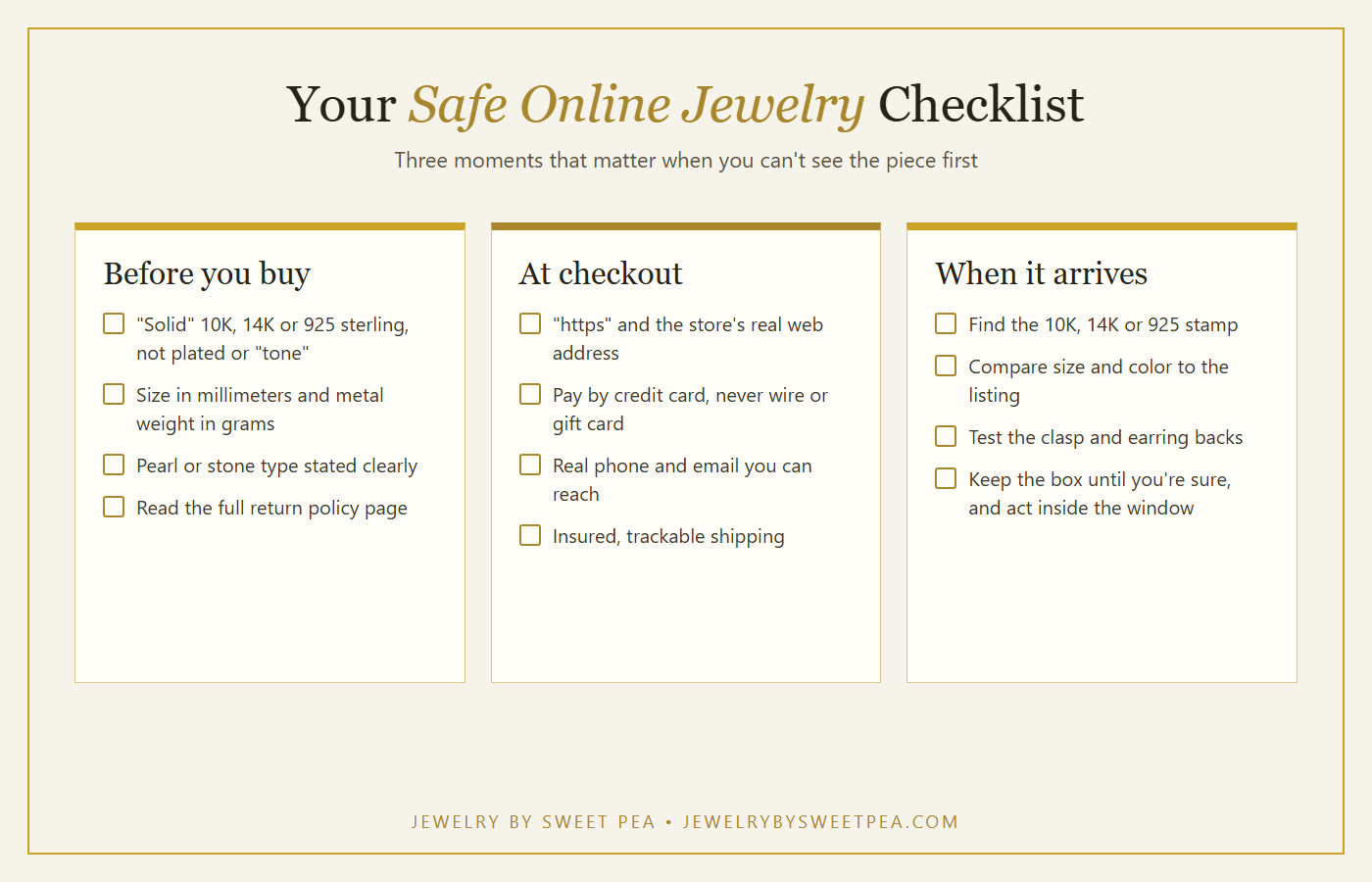
- "Solid 14K gold" or "10K gold" means the whole piece is that gold alloy. This is what lasts.
- "Sterling silver" or "925" means 92.5% pure silver. Some sterling is finished with rhodium, a bright white metal that slows tarnish. That's a finish on solid silver, not a cheap base.
- "Gold-plated," "gold tone," "vermeil" or "gold-filled" means a layer of gold over another metal. These can be fine as fashion jewelry, but the gold can wear through, and they aren't priced like solid gold.
If a listing just says "gold" with no karat, or the price is well below what the gold alone would cost, ask questions or move on. At our shop we sell solid 10K and 14K gold and sterling silver, and we say so in each listing.
What details should a good listing include?
Photos are flattering by nature. Close-up studio shots can make a tiny pendant look large. The numbers tell you what you're really getting, so look for:
- Dimensions in millimeters. Hold a ruler up to your ear, finger or collarbone to picture it. For scale, a U.S. dime is about 18mm across, so a 10mm pendant is smaller than most people expect.
- Approximate metal weight in grams. Two chains can look alike in photos, but the heavier one has more gold and will hold up better. Weight is also the best way to compare prices between stores.
- Chain length and clasp type. A 16-inch chain sits at the base of the neck, an 18-inch chain a little lower. Is a chain included with the pendant, or sold separately?
- Stone or pearl details. Is the pearl cultured or imitation? Is the stone natural, lab-created or cubic zirconia? A trustworthy seller spells this out.
Every product page on our site lists the metal, measurements and an approximate metal weight, and many include several photos or a short video.
Why does the return policy matter so much?
The return policy is your safety net, because it replaces seeing the piece in person. Read the actual policy page, not just the banner at the top of the site. Look for:
- How long you have. Thirty days from delivery is common and gives you time to wear it once and decide.
- Who pays return shipping. Some stores deduct shipping, "restocking" or handling fees from your refund. A free return should cost you nothing.
- What can't be returned. Engraved, personalized, resized or damaged pieces are usually final sale everywhere. Know that before you order a custom item.
- Refund versus store credit. A refund to your card is better than credit you have to spend.
Our own return policy is 30 days from delivery for a full refund. We email a prepaid, insured return label, and nothing is deducted from your refund. Engraved, personalized, resized or damaged pieces are the exceptions.
How do you keep your payment and delivery safe?
- Check the address bar. The checkout page should start with "https" and show the store's own web address. Be wary of links in unexpected emails or texts that lead to a lookalike site.
- Use a credit card. Credit cards generally give you dispute rights if an item never arrives or isn't as described. Avoid sellers who ask for wire transfers, gift cards or payment apps for a "discount."
- Look for real contact details. A phone number, email and a business you can reach before you buy. Send a question first if you're unsure. How quickly and clearly they answer tells you a lot.
- Watch the tracking. Fine jewelry should ship insured and trackable. If you won't be home, have it held at the carrier or shipped somewhere safe.
What should you check when the package arrives?
Open it the day it arrives, and keep the box, pouch and packing slip until you're sure you're keeping it.
- Find the stamp. Look for 10K, 14K or 925 on the clasp, post or back of the piece. Very small pieces and some earrings may be too tiny to stamp, so check the listing and the packing slip too.
- Compare it to the listing. Check the metal color, length, size and any stones against the product page.
- Try it on. Make sure clasps close securely and earring backs hold snugly.
- Act inside the window. If something isn't right, contact the store right away, not on day 29.
Which pieces are the easiest to buy online?
Classic, simple styles are the least risky, because there's little guesswork about how they'll look. Here are in-stock favorites from our shop. Prices are approximate and move with the metals market.
- Sterling Silver 3-4mm Black Freshwater Cultured Pearl Stud Earrings, about $27. Small, simple studs are nearly impossible to get wrong.
- Sterling Silver 4-5mm White, Pink and Purple Freshwater Cultured Pearl Stud Earring Set, about $58. Three pairs, a nice first-pearls gift.
- Sterling Silver 1mm Curb Chain, about $33, in 16, 18 or 20 inches. A dependable everyday chain on its own or with a pendant.
- 14K Yellow Gold Rope Chain with Barrel Bead, about $246. A 16-inch chain with a 2-inch extension, so length is flexible.
- 14K Yellow Gold Hoop Earrings, about $298. Polished solid gold hoops that go with everything.
- 14K Yellow Gold Hoop Earrings, next size up, about $365. Compare the listed sizes and weights to choose between the two.
For pearls, the GIA's guide to pearl quality factors explains luster, surface and shape in plain language. You can browse more on our earrings, chains and pearl jewelry pages.
What should you expect to spend?
- Under $60: Sterling silver chains, pearl studs and charms. A low-risk way to try a new store.
- $150 to $400: Solid 10K or 14K gold chains, hoops and small pendants. Here, compare metal weight between listings.
- $400 and up: Heavier gold and fine gemstone pieces. Read the return policy twice and ask the store any questions before you buy.
Frequently asked questions
Is it safe to buy fine jewelry online?
Yes, when the seller clearly describes the metal, lists measurements and weight, offers a written return policy, and uses a secure checkout. Paying by credit card adds another layer of protection.
How can I tell if online jewelry is real gold?
The listing should say "solid" with a karat, such as 10K or 14K, and the piece should carry a matching stamp. Words like plated, tone, filled or vermeil mean a gold layer over another metal.
What if the jewelry looks different than the photos?
Compare it to the listed measurements first, since photos are often enlarged. If it still isn't what you expected, return it within the window. With a free-return policy, that shouldn't cost you anything.
Can I return earrings bought online?
Many stores accept earring returns if they're unworn and in their original packaging, but policies vary, so check before you buy. Our 30-day return policy covers earrings like other jewelry, except engraved, personalized or damaged pieces.
Should I buy an engraved or personalized piece online?
It can be a lovely gift, but custom pieces are usually final sale. Double-check the spelling, size and metal before ordering, and ask the store to confirm the details if you're unsure.