
Hypoallergenic Jewelry vs Regular Jewelry: What Sensitive Skin Wearers Need to Know
The short answer: "Hypoallergenic" is a marketing word, not a regulated standard, so it does not guarantee anything. What matters is the metal touching your skin. Most jewelry reactions come from nickel, often hidden under plating on inexpensive pieces. Titanium, solid 14K gold and sterling silver are the safer everyday choices for most sensitive skin.
If your earlobes itch by lunchtime or a ring leaves a red, scaly band behind, you are not imagining it and you are not alone. Metal sensitivity is common, and it is one of the questions our family hears most often. The good news is that it is usually easy to work around once you know what to look for on a label. This guide walks through the difference between jewelry sold as "hypoallergenic" and ordinary costume jewelry, and how to shop so your skin stays calm.
What does "hypoallergenic" actually mean on jewelry?
It means the seller believes the piece is less likely to cause a reaction. That is all. There is no federal test a piece has to pass before the word can go on the tag, and two products both labeled hypoallergenic can be made of very different metals. Treat the word as a starting point, then look for the actual metal name.
The words that do carry rules are the metal and karat marks. The FTC's Jewelry Guides set out how terms like 14K, sterling silver, gold filled and gold plated may be used. A piece marked "gold tone" or "silver tone" tells you its color, not what it is made of.
Why does regular jewelry make my skin react?
For most people the culprit is nickel. It is cheap, strong and shiny, so it shows up in a lot of costume jewelry, earring posts, clasps and the base metal underneath plating. MedlinePlus lists metals like nickel among the common triggers of allergic contact dermatitis, the itchy rash that shows up where something touched your skin.
Plating is the other half of the story. A thin gold or silver layer can feel fine for the first few weeks. Then friction, sweat and soap wear it thin, and the base metal underneath is suddenly against your skin. That is why a cheap pair of earrings often seems fine at first and then starts to bother you later. Once a sensitivity starts, it tends to stick around, so it pays to choose gentler metals from the beginning rather than waiting for a reaction.
Which metals are the safest choices for sensitive skin?
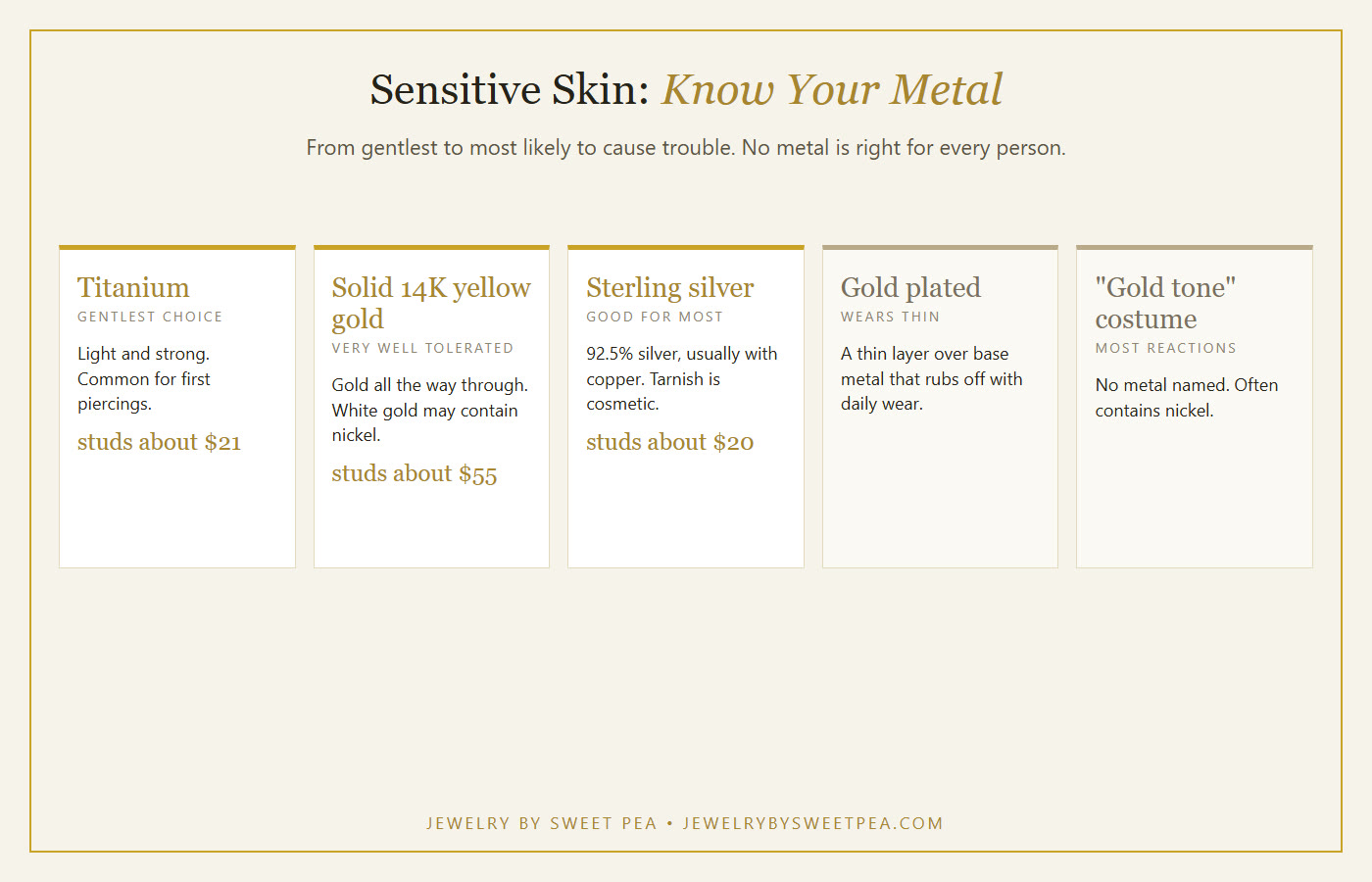
- Titanium. Light, strong and widely used for first piercings because it is so well tolerated. It is our first suggestion for very reactive ears.
- Solid 14K gold. Gold itself rarely causes trouble. Gold alloys contain other metals for strength and color, and white gold in particular can contain nickel, so if you are very sensitive, yellow gold is the calmer pick and it is worth asking before you buy white gold.
- Sterling silver. Sterling is 92.5 percent pure silver, usually alloyed with copper. Many sensitive wearers do well with it. It can tarnish, which is cosmetic, not harmful, and a polishing cloth brings it back.
- Use caution with: anything sold as "fashion," "gold tone" or "silver tone" with no metal named, and plated pieces you plan to wear every day.
No metal is safe for every single person. If you have a known allergy or a reaction that does not settle down, a dermatologist can patch test you and tell you exactly what to avoid.
What are good picks for sensitive ears?
Earrings cause more reactions than anything else because the post sits inside the skin. Here are pieces from our store, with the live price on the day this was written. Gold and silver prices move, so treat each one as "about."
- The titanium 3mm ball stud earrings, about $21. Simple, tiny and the gentlest option on this list.
- The sterling silver 3mm round CZ studs, about $20. A little sparkle at a small price.
- The sterling silver 10mm endless tube hoops, about $18. Light enough to forget you are wearing them.
- The 14K yellow gold 3mm puffed ball studs, about $55. Solid gold post and back, the classic everyday stud.
- The 14K white gold 3mm ball studs, about $55, for silver-color fans whose skin tolerates white gold.
- The 14K yellow gold 7.5mm hinged huggie hoops, about $134. Snug, solid gold and easy to sleep in.
For rings, a plain titanium 2mm domed comfort-fit band, about $24, is a nice way to test whether a metal suits you before you spend more. If you are shopping for someone else and do not know how sensitive they are, titanium or solid yellow gold studs are the safest surprise, and a gift receipt takes care of the rest. See all styles in our earrings collection.
Hypoallergenic vs regular jewelry: how do they compare on price?
- Under $25: titanium studs, sterling silver studs and hoops, a titanium band. This is the easy place to start if you are not sure what your skin likes.
- About $50 to $60: solid 14K yellow or white gold ball studs.
- About $130 and up: solid 14K gold huggie hoops and larger gold pieces.
Costume jewelry can be cheaper up front, but if it ends up in a drawer after one reaction, it was not a bargain. A single pair of solid or titanium studs you can actually wear is the better buy.
How can I keep a reaction from coming back?
- Read the metal, not the tag line. Look for titanium, 14K, 10K or sterling silver spelled out.
- Check the post and the back. A pretty front with a mystery-metal post is the most common trap.
- Keep pieces clean and dry. Soap and lotion trapped under a ring or behind an earring can irritate skin all on its own.
- Give irritated skin a break. Take the jewelry out until the skin calms down, then try a gentler metal.
Frequently asked questions
Is hypoallergenic jewelry guaranteed not to cause a reaction?
No. "Hypoallergenic" is not a regulated term, and no metal is right for every person. It is much more useful to know the actual metal, such as titanium, solid 14K gold or sterling silver.
Is 14K gold hypoallergenic?
Many people with sensitive skin wear solid 14K yellow gold without trouble. The gold is rarely the problem; the other metals in the alloy can be. White gold can contain nickel, so very sensitive wearers often do better with yellow gold.
Can I wear sterling silver if I have a nickel allergy?
Sterling silver is usually alloyed with copper rather than nickel, and many people with nickel sensitivity wear it comfortably. If you are unsure, start with a small, inexpensive pair of studs.
What is the best earring metal for very sensitive ears?
Titanium is the gentlest choice for most people, followed by solid 14K yellow gold. Both are common for new piercings for that reason.
Why do my earrings bother me only after a few weeks?
That pattern often points to plating wearing thin and exposing the base metal underneath. Solid metals do not have a layer to wear through.