The Questions Jewelry Professionals Wish More Customers Would Ask Before Buying
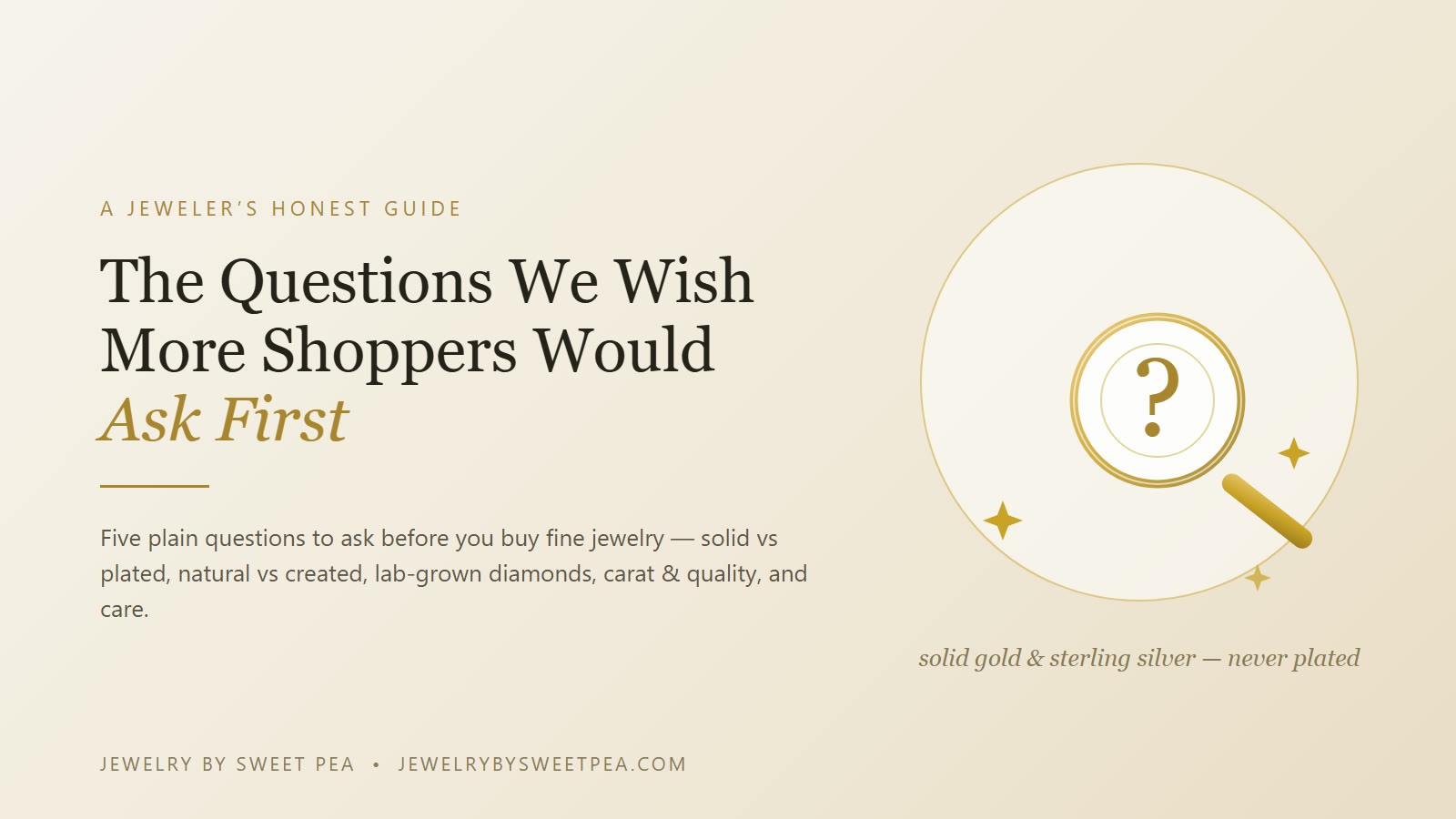
The short answer: ask five things before you buy — is the metal solid gold or silver (not plated), is the gemstone natural or lab-created, are the diamonds natural or lab-grown, what the carat weight and quality actually are, and whether the piece can be sized, repaired, and re-finished. A good seller answers all five plainly. If the answers are vague, that is the answer.
We're a small, family-run jewelry store, and the questions that make us happiest are the ones shoppers are often too shy to ask. Nobody wants to feel like they're interrogating a jeweler — but the people who ask these questions buy better, spend smarter, and almost never regret what they bought. None of this is secret knowledge. It's just the stuff we wish more people knew to ask. Here are the five questions, what a straight answer sounds like, and a real piece from our shelves to show what each one looks like in practice.
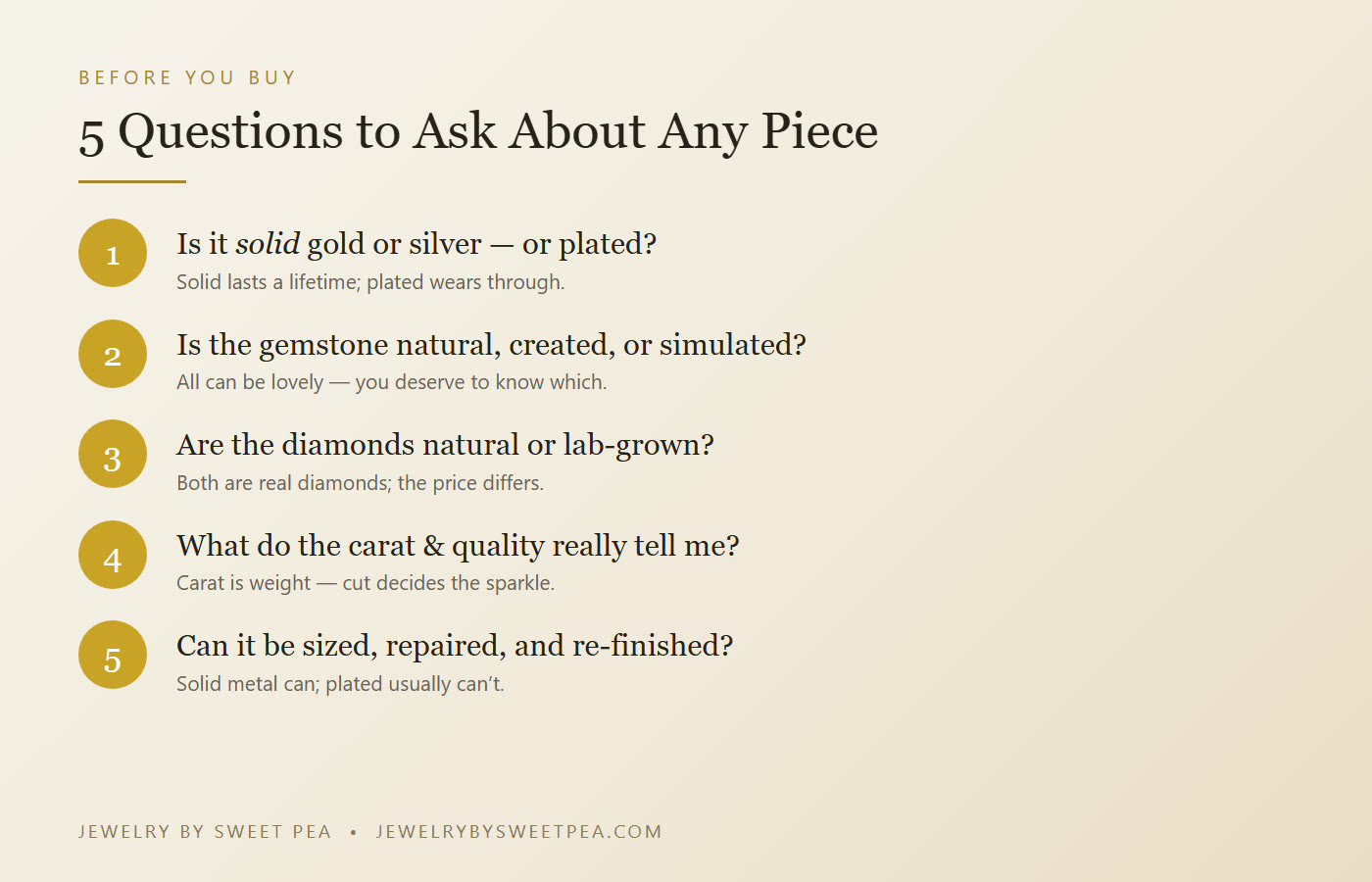
1. "Is this solid gold or silver — or is it plated or gold-filled?"
This is the single most important question, because the words sound almost the same and mean very different things. Solid 10K or 14K gold is gold all the way through — it lasts for generations and can be repaired. Gold-plated and gold-filled are a thin gold layer over a cheaper base metal; the layer wears through, and what's underneath can't be the heirloom you intended. The price gap is the giveaway: a "14K gold" chain for $19 is plated, full stop.
A real solid-gold piece states its purity and feels substantial. Our 14K Yellow Gold Rope Chain Necklace (about $220) is marked 14K and described as solid — the kind of chain you can wear daily for decades. U.S. jewelers are legally bound by the FTC Jewelry Guides (16 CFR Part 23) on exactly how gold and silver content may be described, so a listing that's coy about karat or dodges the word "solid" is telling you something. Everything we sell is solid 10K/14K gold or genuine sterling silver — never plated base metal.
2. "Is the gemstone natural, lab-created, or simulated?"
All three can be beautiful, but they're priced very differently and you deserve to know which you're buying. Natural stones formed in the earth. Lab-created (or "created") stones are the same mineral grown in a lab — chemically real, just made by people, and far more affordable. Simulated stones (like CZ standing in for diamond) only look the part. The honest move is for the seller to label it, and a reputable jeweler always does.
You'll see both on our site, clearly named. The Sterling Silver Created Sapphire Pendant (about $31) says "created" right in the name — a genuine lab-grown sapphire in solid sterling silver, which is how you get a rich blue stone at a gift-friendly price. By contrast, the 14K Yellow Gold Genuine Opal & Sapphire Pendant (about $320) uses natural stones in solid gold. Neither is "better" — they're honest choices at different prices. If you ever want to understand how stones are grown or treated, the Gemological Institute of America's guide to gem treatments is a plain-English primer.
3. "Are the diamonds natural or lab-grown — and does it matter?"
This one trips up a lot of shoppers in 2026, because lab-grown diamonds are everywhere now. Here's the calm version: a lab-grown diamond is a real diamond — same carbon, same sparkle, same hardness — just grown in a lab instead of mined. It typically costs less for the same size, which is wonderful news if you want more sparkle for your budget. The only thing that matters is that the seller tells you which it is, because the resale and market value differ.
We label ours. The 14K Yellow Gold Lab Grown Diamond & Created Sapphire Pendant (about $350) says "lab grown" plainly — solid 14K gold, a real lab-grown diamond, and a created sapphire, which is a lovely way to get a diamond-and-gemstone look without a natural-mined price tag. The question to ask is simply: "Is this diamond natural or lab-grown?" Any jeweler worth buying from will answer in one sentence.
4. "What does the carat weight and quality actually tell me?"
"Carat" measures a diamond's weight, not its size or its sparkle — and weight is only one of the famous Four Cs (carat, cut, color, clarity). A well-cut smaller diamond can outshine a bigger, poorly cut one. So when a listing says ".20 ct," that's the total diamond weight, and it's worth asking how that weight is distributed and how the stones are cut.
Our 10K White Gold .20Ct. Diamond Stud Earrings (about $315) are a good teaching example: ".20Ct." is the combined weight of the pair, set in a classic 4-prong solid-gold mount. For a friendly explainer on how the Four Cs fit together — and why two same-carat diamonds can look and cost very differently — the GIA's Four Cs of diamond quality is the gold standard. The point of asking isn't to become a gemologist; it's to make sure the carat number you're paying for is buying real beauty, not just heft.
5. "Can it be resized, repaired, and re-finished later?"
Fine jewelry is meant to be lived in, which means it occasionally needs a jeweler's touch — a ring sized up, a clasp replaced, a finish refreshed. Solid gold and sterling silver can be worked on; plated pieces usually can't. It's also worth understanding normal maintenance versus a defect.
A great example is rhodium plating on silver. Our Sterling Silver Rhodium-Plated Sapphire Pendant (about $107) is solid sterling silver with a thin rhodium finish that makes it bright and tarnish-resistant. That rhodium layer can gently wear over years of wear — and the good news is it can simply be re-plated, because the silver underneath is solid and real. Knowing that up front means you won't mistake normal, fixable wear for a flaw. Ask any seller: "If this needs sizing or re-finishing in five years, can it be done?"
What you should expect to pay — and what you're paying for
Honest prices track honest materials. Here's roughly how it breaks down, using pieces above:
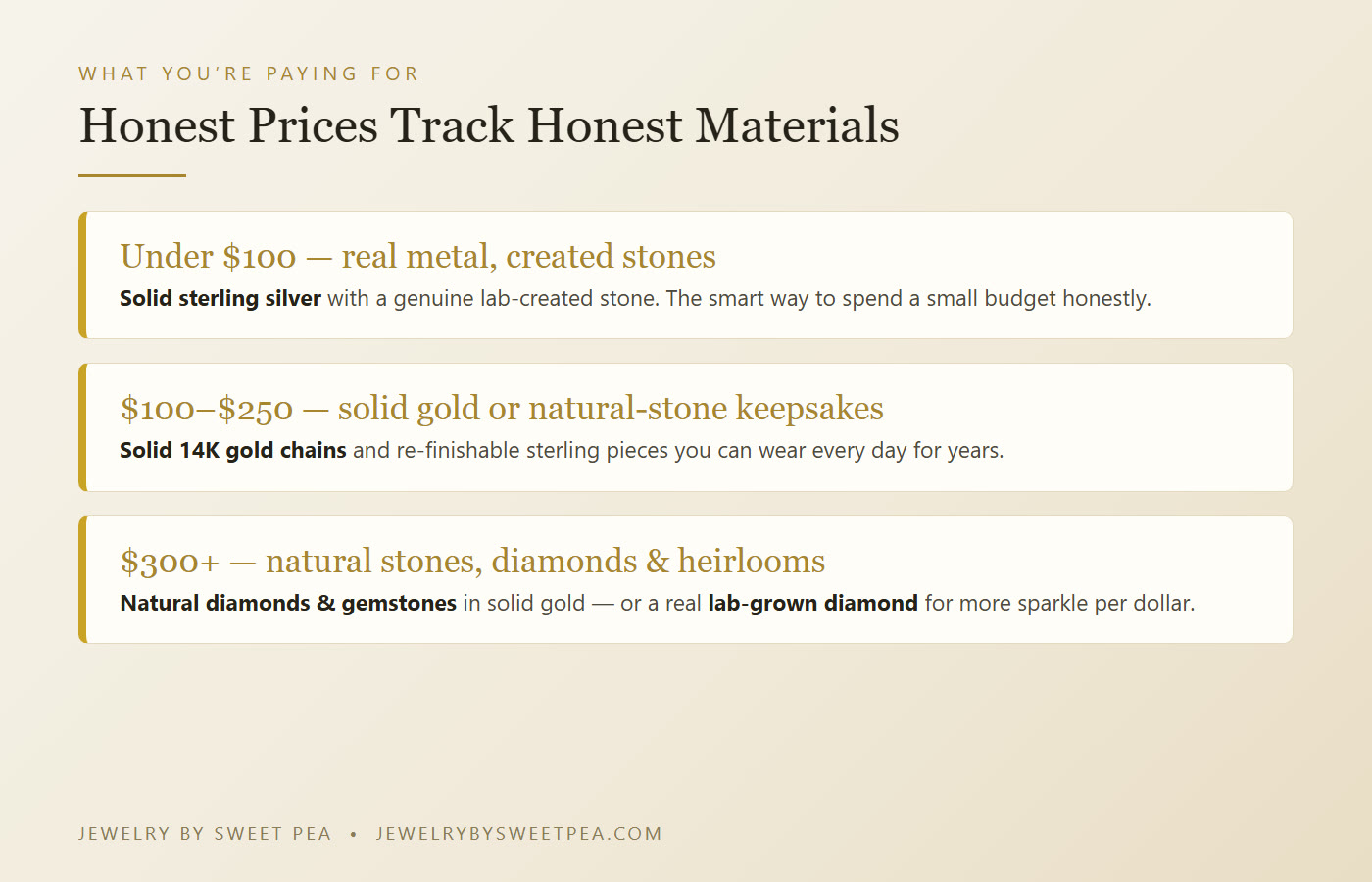
Under $100 — real metal, created stones
- Sterling Silver Created Sapphire Pendant — about $31. Solid sterling silver, a genuine lab-created sapphire. This is the smart way to spend a small budget: real metal, an honestly-labeled created stone.
$100–$250 — solid gold or a natural-stone keepsake
- Sterling Silver Sapphire Pendant — about $107. Solid sterling, re-finishable, classic.
- 14K Yellow Gold Rope Chain Necklace — about $220. Solid 14K gold you can wear every day.
$300+ — natural stones, diamonds, and heirloom pieces
- 10K White Gold .20Ct. Diamond Stud Earrings — about $315. Natural diamonds in solid gold.
- 14K Yellow Gold Genuine Opal & Sapphire Pendant — about $320. Natural stones, solid gold.
- 14K Lab Grown Diamond & Created Sapphire Pendant — about $350. A real lab-grown diamond for more sparkle per dollar.
Prices shown are at the time of writing; solid-gold and gemstone pieces move with the metal and stone markets. Every piece here is genuine solid gold or sterling silver — never plated base metal.
Browse more in our Pendants & Charms collection, Necklaces, and Earrings — or just ask us any of these five questions about any piece. We like answering them.
Frequently asked questions
What questions should I ask before buying fine jewelry online?
Ask five: (1) Is the metal solid gold or silver, or plated/gold-filled? (2) Is the gemstone natural, lab-created, or simulated? (3) Are the diamonds natural or lab-grown? (4) What is the carat weight and overall quality? (5) Can the piece be sized, repaired, and re-finished later? A trustworthy seller answers all five clearly. Vague answers are a warning sign.
How can I tell if jewelry is real gold and not plated?
Look for a stamped karat mark (10K, 14K, 18K) and a seller who plainly states the metal and uses the word "solid." Price is the biggest tell — genuine solid gold can't be sold for a few dollars. U.S. sellers must follow the FTC Jewelry Guides on how gold content is described, so a listing that avoids stating karat or leans on words like "gold-tone" or "gold-finish" is almost always plated.
Are lab-grown diamonds and created gemstones real?
Yes. A lab-grown diamond is a real diamond — identical carbon, hardness, and sparkle — just grown in a lab rather than mined, and usually less expensive for the same size. A "created" or lab-grown gemstone (like a created sapphire) is the same mineral as its natural counterpart. "Simulated" is different: a simulant only imitates the look. The key is that the seller labels which one you're buying.
Does carat weight tell me how big or sparkly a diamond is?
Not by itself. Carat measures weight, not dimensions or brilliance. Cut, color, and clarity — the rest of the Four Cs — determine how a diamond actually looks. A smaller, well-cut diamond can outshine a larger, poorly cut one of the same carat weight, which is why it's worth asking about cut, not just carat.
Why does rhodium-plated sterling silver wear, and is that a defect?
It's normal, not a defect. Rhodium is a bright, tarnish-resistant finish applied over solid sterling silver. Because it's a thin surface layer, it can gently wear after years of wear — and because the silver beneath is solid and real, a jeweler can simply re-plate it. Knowing this up front keeps you from mistaking ordinary, fixable wear for a flaw in the piece.
Jewelry by Sweet Pea is a family-run fine jewelry store. Every piece is solid 10K or 14K gold or sterling silver — never plated base metal — sourced from U.S. wholesalers and shipped from the USA. Browse our Pendants & Charms collection or ask us anything before you buy.