
What Jewelry Pieces Are Most Frequently Described as Future Family Heirlooms
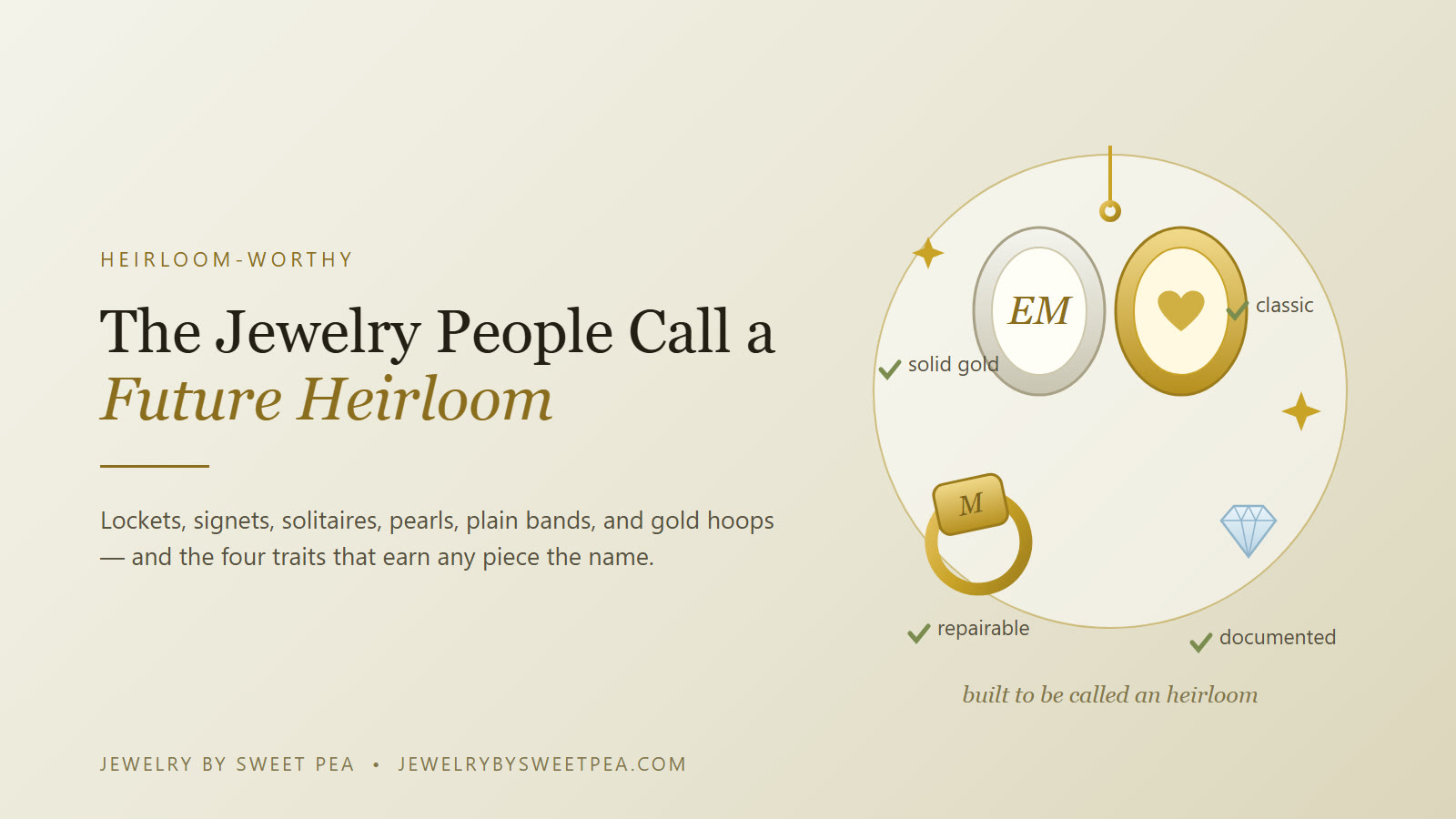
The short answer: when shoppers say a piece is a "future family heirloom," they're almost always describing one of six things — a gold locket, a signet ring, diamond solitaire jewelry, genuine pearl earrings, a plain gold wedding band, or classic gold hoops. What earns the label isn't price. It's four traits: the piece is solid precious metal, the design is classic rather than trendy, it can be repaired and resized, and it comes with some form of documentation — a certificate, an engraving, or a written story.
Read jewelry reviews and gift notes and the same phrase keeps appearing: "this will be a family heirloom someday." Buyers don't say it about the biggest or flashiest pieces — they say it about specific kinds of jewelry with specific traits. Here's what people actually mean when they call a piece a future heirloom, which pieces get described that way most often, and how to buy one on purpose instead of by luck.
The 4 traits buyers are really describing
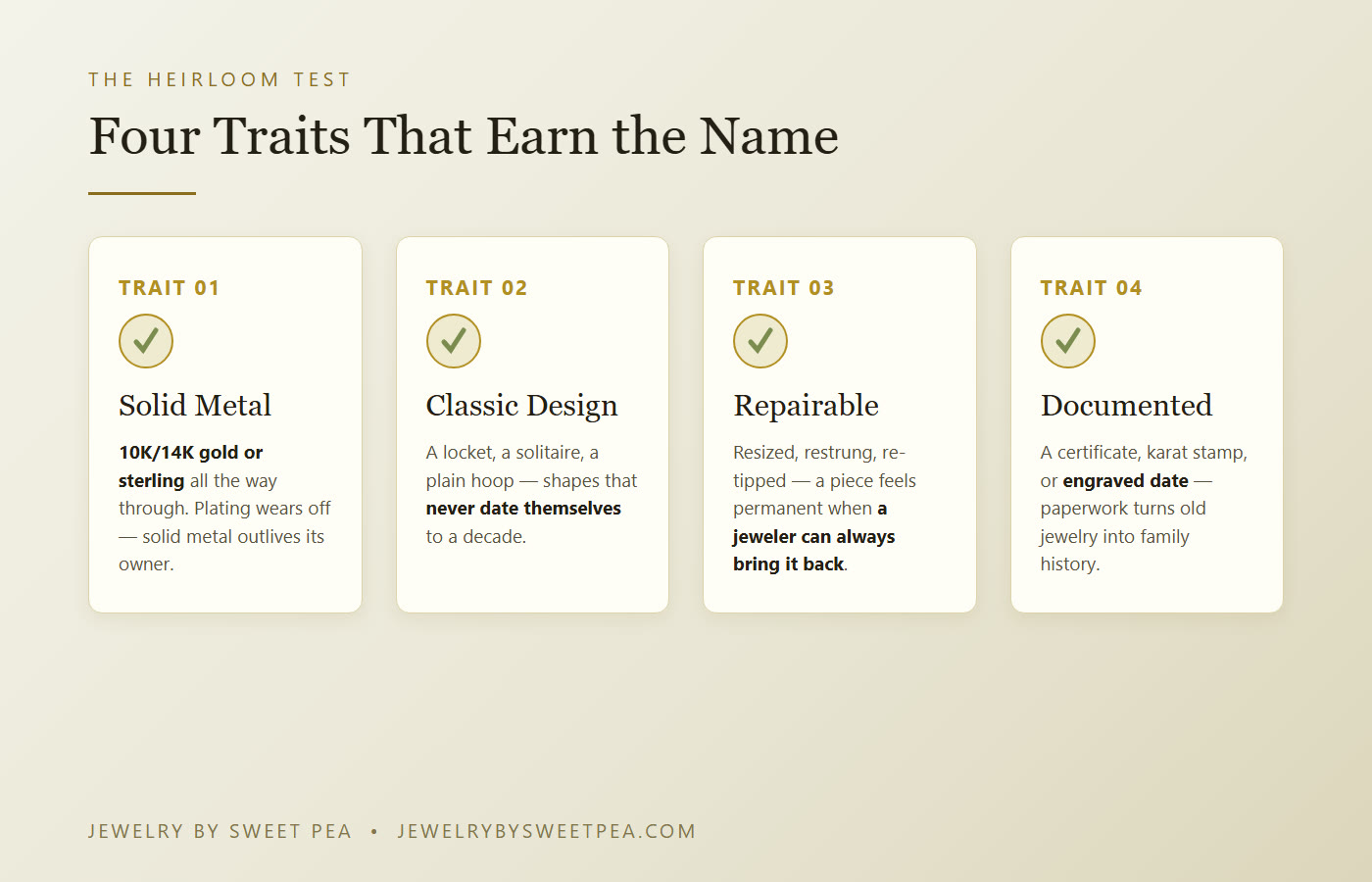
"Heirloom" sounds like a feeling, but it behaves like a checklist. When a buyer instinctively calls a piece heirloom-worthy, it almost always passes these four tests:
- Solid precious metal, all the way through. Solid 10K or 14K gold and genuine sterling silver can be worn for fifty years, polished, and worn for fifty more. Plated jewelry can't — once the coating wears through to base metal, no jeweler can bring it back. Under the FTC Jewelry Guides (16 CFR Part 23), sellers must describe gold content plainly — so if a listing says "gold-plated," "gold-tone," or "layered," believe it, and don't expect an heirloom.
- A design that doesn't date itself. A polished locket, a round solitaire, a plain hoop — these shapes have looked right for a century. Trend pieces read as "so 2026" within a decade, and dated pieces get melted, not inherited.
- It can be serviced. Real heirlooms get repaired along the way: rings resized, hinges tightened, posts replaced, settings re-tipped. Solid gold and sterling take all of that. This is the quiet trait most shoppers sense without naming — a piece feels permanent when a jeweler can always bring it back.
- It carries its own paperwork. A diamond certificate, a karat stamp, an engraved monogram or date, even an index card in the box — documentation is what turns "old jewelry" into "your great-grandmother's ring." Pieces that can be engraved or certified get called heirlooms far more often than pieces that can't.
The 6 pieces most often called future heirlooms
1. A gold locket
No piece attracts the word "heirloom" faster — a locket is built to hold family history. The 10K White Gold Polished Oval Locket (about $158) is the classic form: solid gold, hinged, made to carry two photographs for the next owner to discover. A locket documents itself — trait four, built in.
2. A signet ring
The original heirloom. Signets exist to be engraved with initials or a family monogram, which is exactly why they get handed down. A solid 10K Yellow Gold Signet Ring (about $93) is an affordable start — engrave it now, and it's already a family piece the day it's given.
3. Diamond solitaire jewelry
A single round diamond in a plain setting is the least date-able design in jewelry. The 14K White Gold 1 Carat Certified Lab-Grown Diamond Solitaire Pendant (about $361) checks every box: solid 14K gold, timeless shape, and a grading certificate — paperwork a grandchild can read. To judge any diamond yourself, the Gemological Institute of America's diamond quality guide explains the four factors graders use.
4. Genuine pearl earrings
Cultured pearl studs on solid gold posts are the entry point people most often describe as "her first heirloom" — a classic given at graduations and christenings. The 10K Yellow Gold 7-8mm Round Freshwater Cultured Pearl Stud Earrings (about $58) are genuine cultured pearls, not imitations — the distinction that decides whether they last a generation.
5. A plain gold wedding band
Ask families what they actually inherited and a plain band comes up constantly — worn daily for decades, then worn on a chain by a child. A substantial band like the 10K Yellow Gold 6mm Beveled Edge Comfort Fit Band (about $686) is heirloom-grade by weight alone: solid gold, resizable, engravable inside, and impossible to date to any decade.
6. Classic gold hoops
Hoops are the "worn constantly" heirloom — and frequent wear is what attaches memory to metal. A pair of solid 10K Yellow Gold Hoop Earrings (about $216) is the shape that never leaves style; the pair a mother wears in every photograph is the pair a daughter asks for later.
Prices shown are at the time of writing; solid gold moves with the gold market. Browse more classics in our Earrings, Rings, and Necklaces collections.
Future-heirloom picks by budget
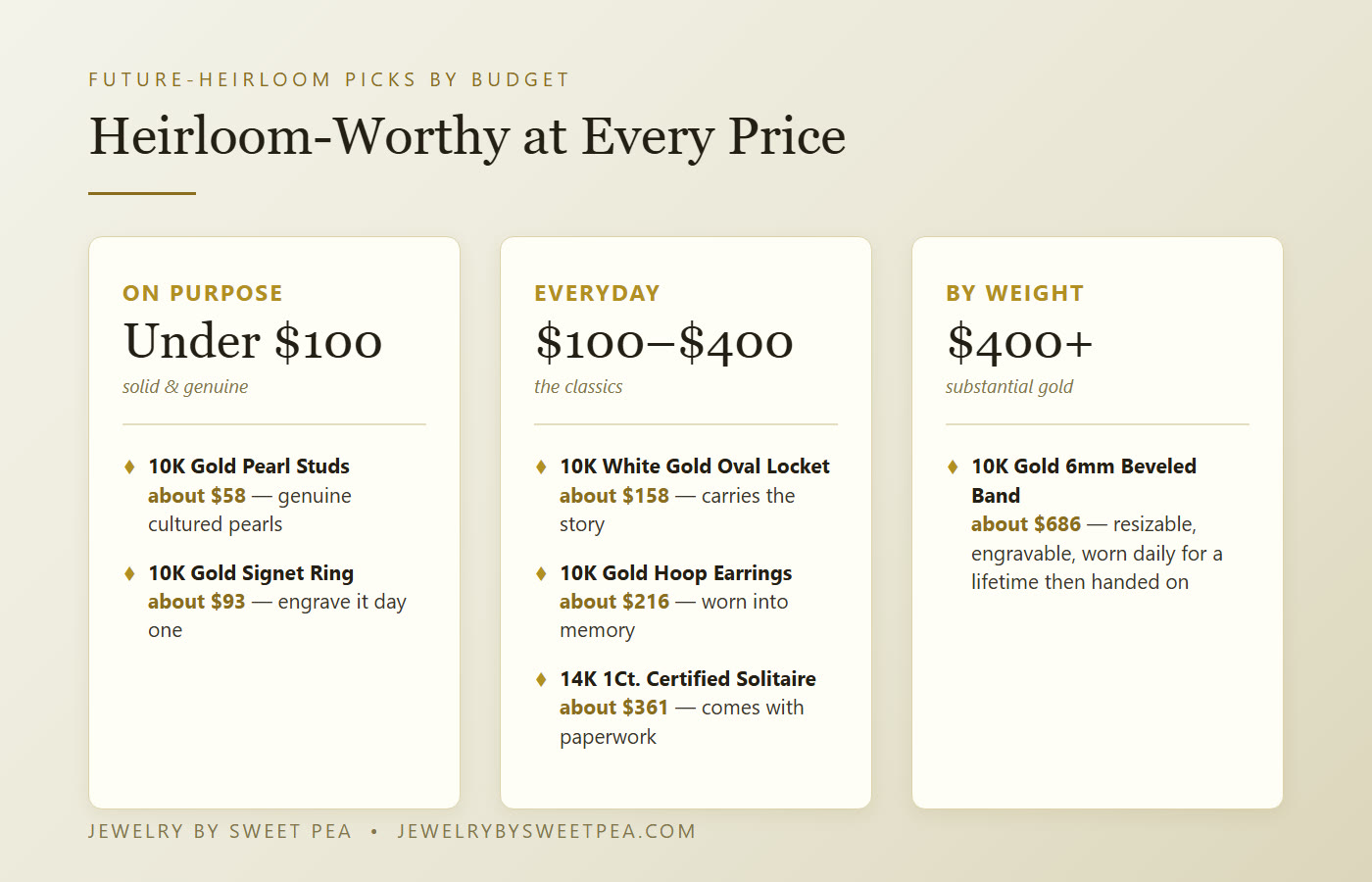
Under $100 — heirloom on purpose
- 10K Gold Genuine Pearl Stud Earrings — about $58. Real cultured pearls on solid gold posts.
- 10K Yellow Gold Signet Ring — about $93. Engrave initials and it's a family piece from day one.
$100–$400 — the everyday classics
- 10K White Gold Oval Locket — about $158. Two photos inside; the piece built to carry a story.
- 10K Yellow Gold Hoop Earrings — about $216. The worn-daily pair that becomes "Mom's hoops."
- 14K Gold 1Ct. Certified Diamond Solitaire Pendant — about $361. Comes with its own paperwork.
$400+ — heirloom by weight
- 10K Gold 6mm Beveled Edge Band — about $686. Substantial solid gold, resizable and engravable for generations.
How to make the label come true
Calling a piece a future heirloom is a wish; three habits make it fact:
- Put the story in writing at purchase. Keep the receipt, the certificate, and one handwritten line — "for your college graduation, 2026" — in the gift box. Documentation is half of what "heirloom" means.
- Engrave what can be engraved. Initials in a signet, a date inside a band, a monogram on a locket. Engraving is the cheapest way to make a piece un-sellable and un-forgettable.
- Service it like you mean it. Restring, resize, re-tip, replace worn posts. A piece kept wearable stays worn — and worn pieces are the ones the next generation fights to keep.
Frequently asked questions
What jewelry do people most often call a future family heirloom?
Gold lockets, signet rings, diamond solitaires, genuine pearl earrings, plain gold wedding bands, and classic gold hoops are the pieces buyers most frequently describe as future heirlooms. All six share solid precious metal, timeless design, repairability, and room for documentation like engraving or a certificate.
What makes a piece of jewelry "heirloom quality"?
Heirloom quality means solid 10K/14K gold or genuine sterling silver (never plated), a classic design that won't date itself, construction a jeweler can repair or resize, and documentation — a karat stamp, certificate, or engraving. A $93 solid gold signet ring qualifies; a $300 plated statement piece never will.
Does an heirloom have to be expensive?
No. Genuine cultured pearl studs on solid gold posts cost about $58, and a solid gold signet ring about $93 — both can genuinely serve the next generation. Price adds weight, not longevity; the material and design do the lasting.
Are lab-grown diamonds heirloom-worthy?
Yes. A lab-grown diamond is a real diamond — same hardness, same permanence — and certified stones come with grading paperwork that travels with the piece. Set in solid 14K gold, a certified lab-grown solitaire meets every heirloom test at a fraction of the mined-stone price.
Should I engrave jewelry I want to become an heirloom?
Almost always. An engraved date, monogram, or initials permanently attaches the piece to your family, makes it far less likely to ever be sold, and gives the next owner the story at a glance. Signet rings, lockets, and wedding bands are made for it.
Jewelry by Sweet Pea is a family-run fine jewelry store. Every piece is solid 10K or 14K gold or sterling silver — never plated — sourced from U.S. wholesalers and shipped from the USA. Browse our Earrings, Rings, and Necklaces collections, or ask us anything before you buy.