
Experts Explain Why Gold Jewelry Turns Skin Green Sometimes and How to Prevent It
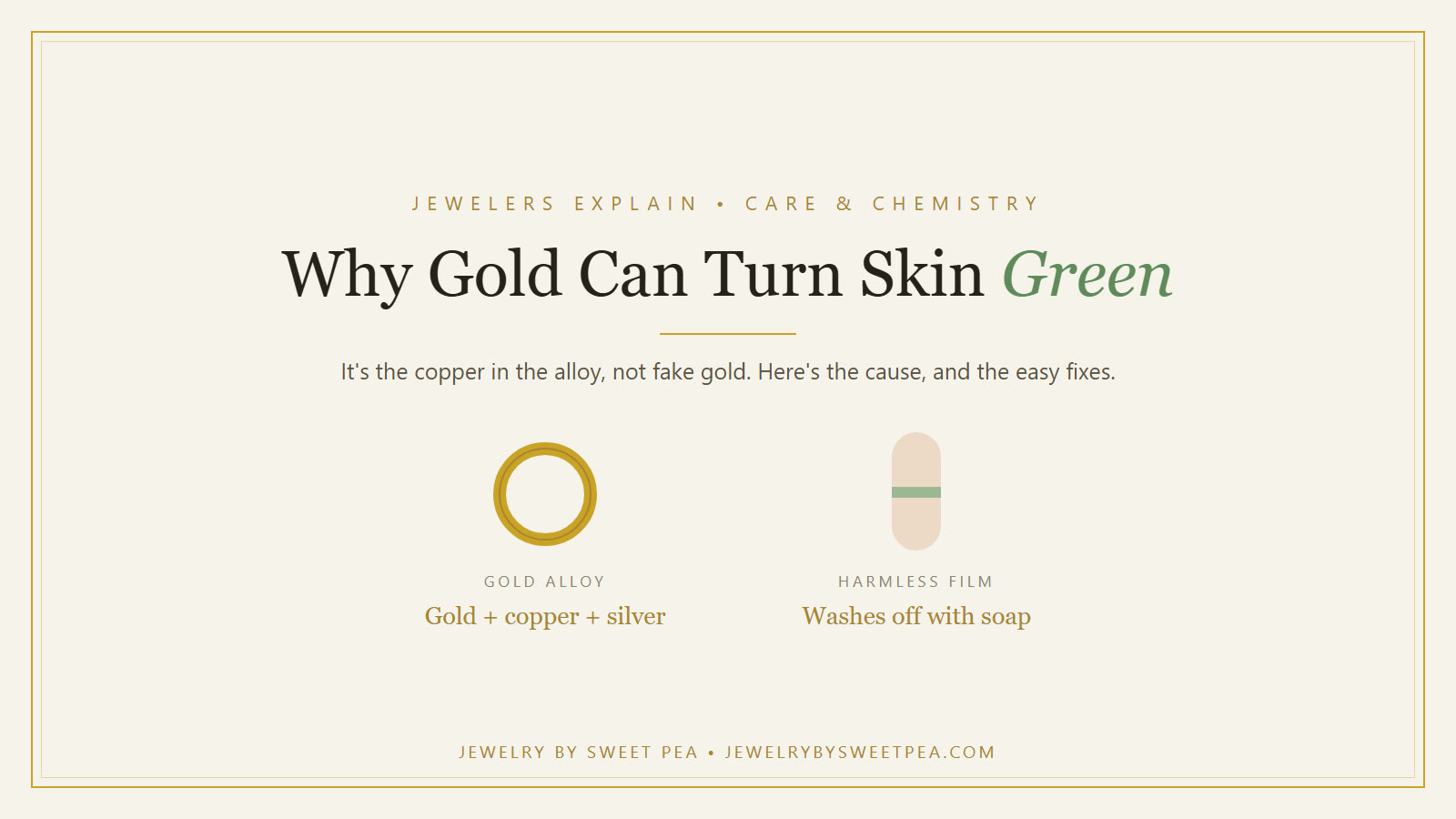
The short answer: Pure gold does not turn skin green. The green comes from copper, which is mixed into 10K and 14K gold to make it strong. When sweat, lotion, soap or chlorine reacts with that copper, it can leave a harmless green film on your skin. Keeping the piece clean and dry, and choosing a higher karat, usually stops it.
We're a small, family-run jewelry store, and this is one of the questions we hear most, often from a worried customer who thinks their ring "must be fake." Usually it is not. Jewelers, metal suppliers and dermatology references all point to the same few causes, and every one of them has a simple fix. Here is what they explain, in plain language.
Why does real gold sometimes turn skin green?
Pure 24-karat gold is very soft and almost never reacts with skin. That is why almost all jewelry is made from a gold alloy: gold blended with other metals, most often copper and silver, sometimes zinc or nickel. The karat tells you how much of the piece is gold:
- 24K is essentially pure gold.
- 14K is 14 parts gold out of 24, about 58.3% gold.
- 10K is 10 parts gold out of 24, about 41.7% gold.
The rest is alloy metal. Copper is the usual culprit. When copper meets moisture and acids, it slowly forms copper salts, which are green. If those salts rub off on your finger, you see a green ring-shaped line. It is the same chemistry that turns an old copper roof or a penny green over time.
The FTC's Jewelry Guides set out how karat gold, plated gold and "gold-filled" may be described when sold, which is a useful reference if you are not sure what you bought.
Why does it happen to some people and not others?
Two people can wear the same ring and only one gets a mark. Jewelers usually point to these factors:
- Body chemistry. Sweat varies in acidity and salt from person to person, and even day to day. More acidic sweat reacts with copper faster.
- Heat and humidity. Hot weather, workouts and long days in gloves mean more sweat trapped under a ring.
- Products on your skin. Lotion, sunscreen, hand sanitizer, cleaning sprays and hair products can react with the alloy or leave a film that holds moisture against the metal.
- Water. Pool chlorine and salt water are hard on alloy metals. So is soap left trapped under a band.
- Medications and hormones. Changes in body chemistry can change how skin reacts to a piece that never caused a problem before.
Does green skin mean my gold is fake?
No. A green mark can come from genuine 10K or 14K gold, because those alloys contain copper. It is more common with lower karats, simply because there is more alloy metal. That said, it is also very common with plated jewelry. A plated piece is a base metal (often brass, which is copper and zinc) with a thin layer of gold on top. Once that layer wears through, the copper underneath touches your skin directly. If a "gold" piece has started showing a different color at the edges or high points, that is a sign of worn plating.
If you are weighing solid gold against plated pieces, our post on how long gold-plated jewelry really lasts walks through the difference.
What about black marks or an itchy rash?
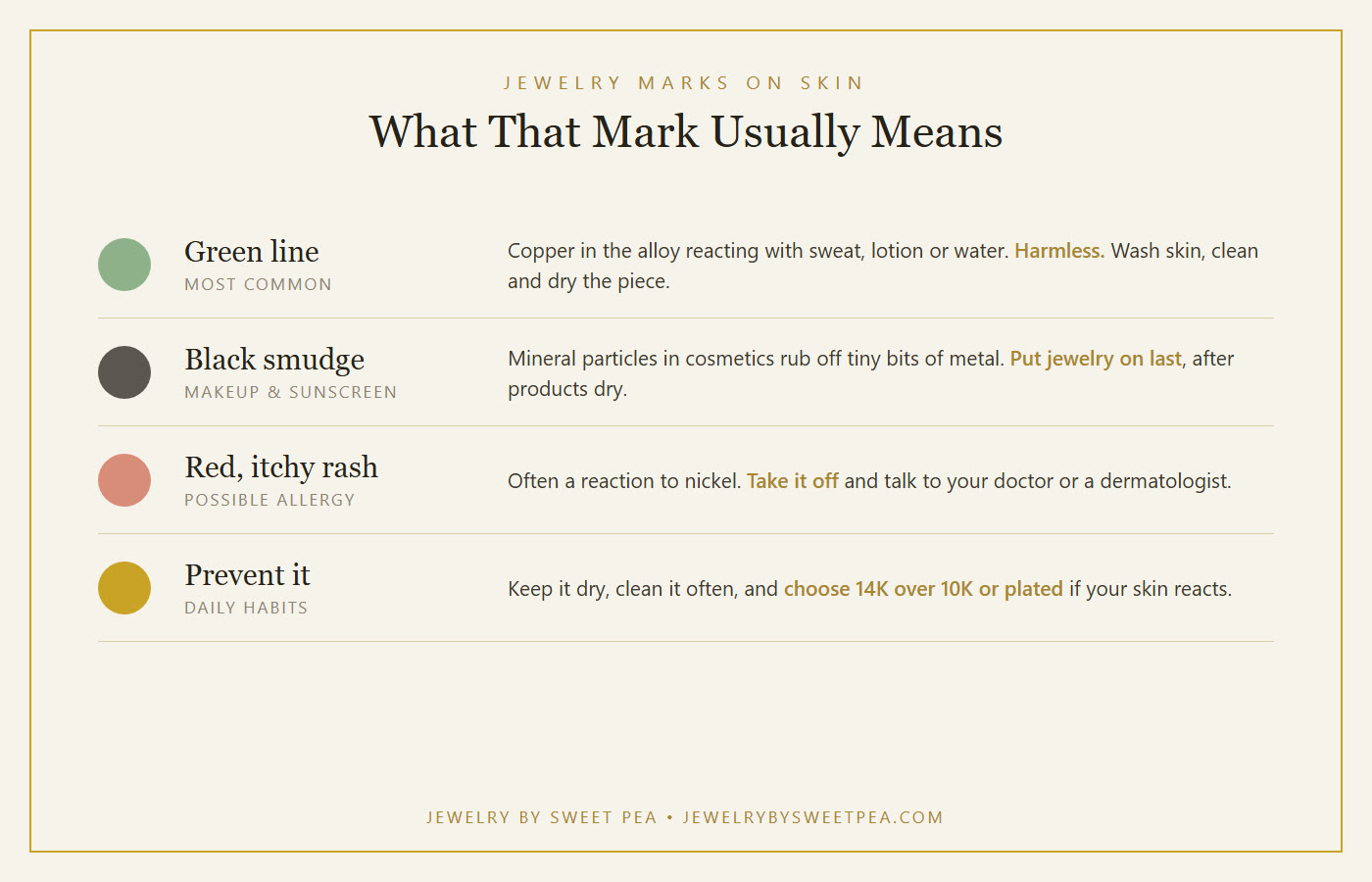
Jewelers separate three different things:
- A green mark is usually the copper reaction described above. It washes off with soap and water and is not harmful.
- A black or gray smudge is often caused by makeup or sunscreen. Some cosmetics contain hard mineral particles that rub tiny bits of metal off the jewelry, which shows up as a dark line.
- Redness, itching, bumps or a rash are different. That can be an allergic reaction, most often to nickel, which is used in some white gold and many costume pieces. MedlinePlus explains this kind of contact dermatitis. If your skin is irritated, take the piece off and talk to your doctor or a dermatologist.
How do you stop gold from turning your skin green?
These habits come up again and again from jewelers, and they work for most people:
- Keep it dry. Take rings off before washing dishes, showering, swimming or working out, and dry your hands fully before putting them back on.
- Put jewelry on last. Apply lotion, sunscreen, perfume and hair spray first, let them dry, and then put on your jewelry.
- Clean it regularly. A gentle wash in warm, soapy water and a soft brush removes the film of oils and lotion that traps moisture. Dry it thoroughly. A jewelry cleaner like the Blitz gem and jewelry cleaner concentrate, about $45, makes it easy to do at home.
- Polish off the tarnish. A soft polishing cloth removes surface tarnish before it can rub off on your skin. The Blitz polishing mitts, about $25 for a pair, include a tarnish retardant.
- Clean your skin, too. If a green line appears, wash it off with soap and water. It usually fades right away.
- Choose a higher karat. If you react to 10K, try 14K. More gold means less copper touching your skin.
Some people brush clear nail polish on the inside of an inexpensive ring as a temporary barrier. It can help for a while on costume jewelry, but it wears off and is not something we would do to fine jewelry.
Which pieces are least likely to cause a problem?
For sensitive skin, jewelers generally suggest solid 14K gold or sterling silver in small, simple shapes that are easy to clean and do not trap water. A few from our store:
- The 14K yellow gold 3mm ball stud earrings, about $55. Small, smooth and solid gold, a classic first pair.
- The 14K yellow gold small endless hoop earrings, about $53. A smooth 9mm hoop with no crevices for soap to hide in.
- The 14K yellow gold 16-inch rope chain, from about $58. A delicate solid gold chain for everyday wear.
- The 10K yellow gold 4mm ball stud earrings, about $42. A good value in solid gold for most people, though 14K is the better pick if you have reacted to gold before.
- The sterling silver 4mm ball stud earrings, about $19, if you prefer silver.
Browse more in our earrings and chains collections.
10K vs 14K: which is better for sensitive skin?
- 10K gold (about 41.7% gold) is the most durable and the most affordable, but has the most alloy metal, so it is the more likely of the two to leave a mark.
- 14K gold (about 58.3% gold) is the everyday sweet spot: still strong, richer in color and less likely to react.
- Plated or "gold-tone" jewelry is the most likely to turn skin green once the thin top layer wears away.
Prices float with the price of gold, so treat each one as "about" and check the product page for today's price.
Frequently asked questions
Is it bad for you if gold turns your skin green?
A green mark from the copper in gold alloy is generally harmless and washes off with soap and water. Redness, itching or a rash is different and may be an allergy, so take the piece off and see a doctor if that happens.
Will 14K gold turn my finger green?
It can, but it is less likely than with 10K gold or plated jewelry. 14K gold is about 58% gold, and the remaining copper can still react with sweat, lotion or chlorine in some people.
Why did my ring start turning my finger green after years?
Something changed: the weather, a new lotion or soap, more time in the pool, a medication, or simply a build-up of grime under the band. A thorough cleaning and keeping it dry often solves it. On plated pieces, it can also mean the plating has worn through.
How do I get the green off my skin?
Wash the area with mild soap and warm water. The mark usually comes right off. Then clean and dry the jewelry before wearing it again.
What jewelry will not turn my skin green?
Higher-karat gold and well-made sterling silver are the least likely. Keep any piece clean and dry, and put it on after lotions and sprays have dried.