
Is It Real Gold? How to Read Stamps and Listings
Updated November 2026. By the Jewelry by Sweet Pea team, a family-owned jeweler since 2008.
The short answer: look for a karat stamp such as 10K, 14K or 18K, or the numbers 417, 585 and 750, on the clasp tag, inside the band or on the post. Letters like GP, GEP and GF mean a layer of gold over another metal. A stamp plus the metal line in the product details is the best check, and a jeweler can test the rest.
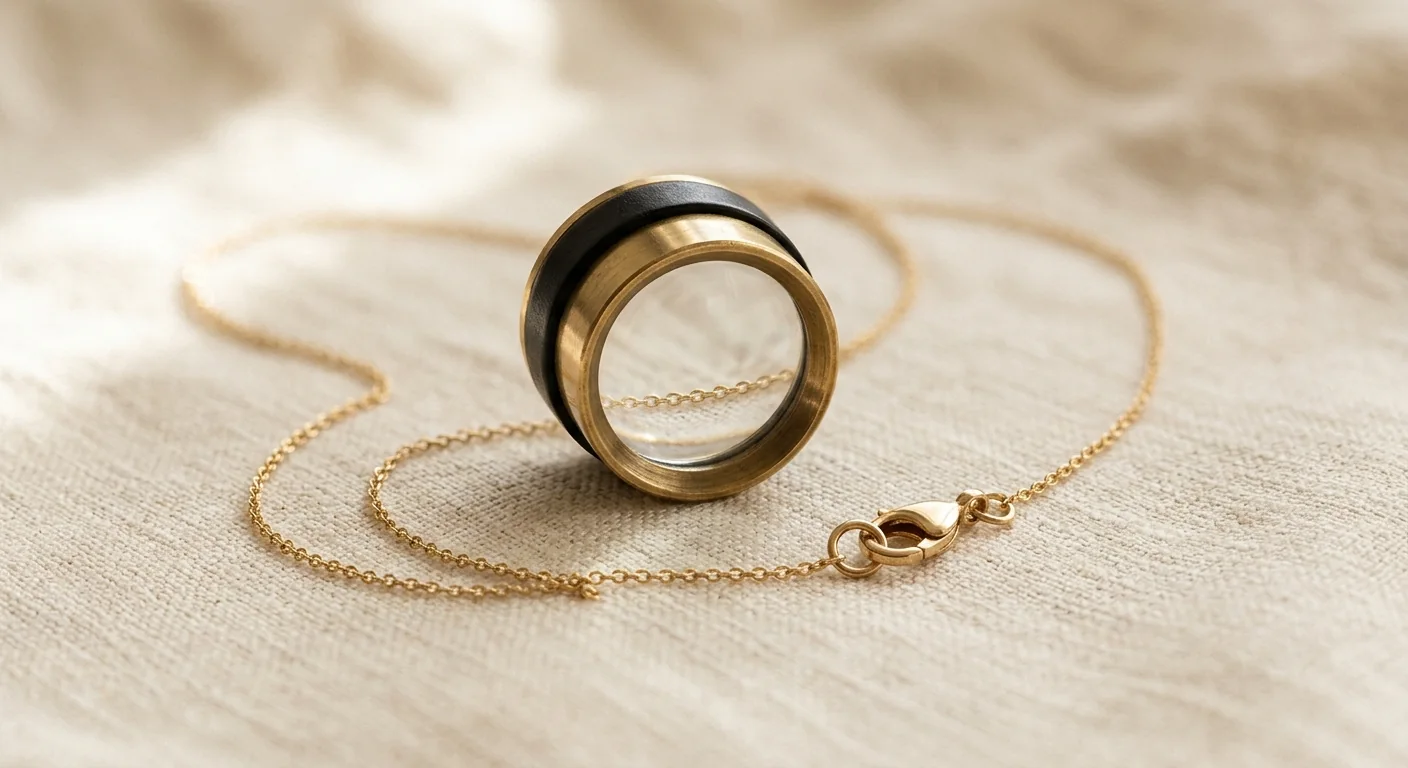
"Gold" can mean very different things in a listing, and a photo can't tell you which. The good news is that real gold carries its answer: a small stamp, and words in the product details. Here's how to read both.
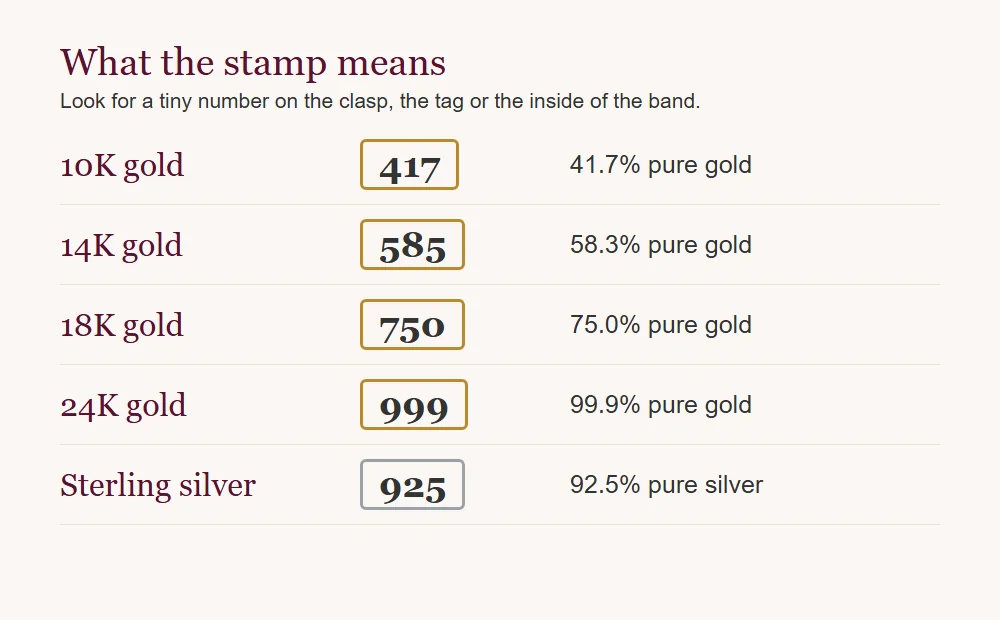
What the stamp means
Pure gold is 24K, and it's too soft for everyday wear, so jewelry gold is mixed with stronger metals. The karat number tells you how much of the mix is gold. Some makers stamp the same thing as a three-digit number, parts of gold per thousand. Both are valid.
Where to look for the stamp
- Necklaces and bracelets: on the small tag next to the clasp, or on the clasp itself.
- Rings: inside the band.
- Earrings: on the post or the back.
- Pendants: on the bail (the loop the chain runs through) or the back.
Stamps are tiny. A jeweler's loupe, or your phone camera zoomed all the way in, makes them easy to read. Very small or delicate pieces may be too small to carry one, so a missing stamp isn't proof of anything either way. Ask us and we'll tell you what we know about that piece.
Reading the listing and the stamp together
| You see | It means | Good to know |
|---|---|---|
| 10K, 14K, 18K (or 417, 585, 750) | Real gold, alloyed with stronger metals. The number is the share of gold: 14K is 58.3%. | The marking you want to see on a gold piece. |
| 925 or Sterling | Sterling silver, 92.5% pure silver. Not gold. | Some gold-colored silver pieces carry this stamp, with a thin layer of gold on top. |
| GP, GEP, HGE, RGP | Gold plated or gold electroplate: a thin layer of gold over another metal. | Not solid gold, even when a karat number comes first, as in 18K GP. |
| GF or 1/20 14K GF | Gold filled: a thicker layer of gold bonded to a base metal. | Longer lasting than plating, but still a layer, not solid gold. |
| Vermeil | Gold over sterling silver. | A nicer base than brass, but the gold is still a surface layer. |
| No karat word or number | The listing doesn't say it's karat gold. | Don't assume it is. Check the product details or ask us. |
Four checks you can do
- Read the metal line in the product details. Look for a karat, such as 14K yellow gold or 10K yellow gold. Words like plated, filled or vermeil describe a layer.
- Find the stamp on the piece when it arrives, and match it to the chart above.
- Check the clasp too. On a gold chain, the clasp is normally stamped as well as the tag.
- Compare the metal weight in the listing. Two pieces can look the same in a photo and hold very different amounts of metal.
Home tests: what they can and can't tell you
- A magnet: gold is not magnetic, so a piece that sticks strongly isn't gold. But clasps and springs often contain steel, and a non-magnetic piece can still be plated, so a magnet can rule something out but never proves it.
- Skin or clothing marks: a green or dark mark can point to a base metal under a coating, but it isn't proof either way.
- The sure way: a jeweler can test the metal and confirm the karat quickly.
Real gold can still be lighter than you expect
Karat tells you the purity of the gold, not how much of it is in the piece. Some real gold jewelry is hollow inside or made with thin walls to keep it light. The metal weight in the listing is the best way to compare two pieces that look alike.
Want to learn more?
Our experts explain more in how to read a gold karat stamp, solid gold vs. gold-plated and gold vermeil vs. solid gold. You can also browse our sterling silver and gold-plated sterling silver pieces, which say what they are.
More jewelry guides
- How to Find Your Ring Size: Measure at home with our printable sizer and size chart.
- Necklace Length Guide: See where each length sits and try it with a piece of string.
- Gold and Metals Guide: 10K or 14K, sterling silver, plated and more, compared.
- Engraving Guide: How it works, wording tips and what to check before you order.
Real Gold Questions
Is 10K real gold?
What does 585 mean on jewelry?
What do GP, GEP and GF mean?
Can I tell if jewelry is real gold at home?
Can you help me check a piece?
Know What You Want?
Shop 14K Gold
Rings, necklaces, earrings and more in 14K yellow gold.
Shop 14K GoldLike This Guide?
Join the Sweet Pea Family
Join the list and take $15 off your first order of $100 or more with code SPARKLE15. Plus new arrivals, gift guides and subscriber-only offers — every other week.
Excludes collegiate/LogoArt pieces. Free shipping on everything, always.